


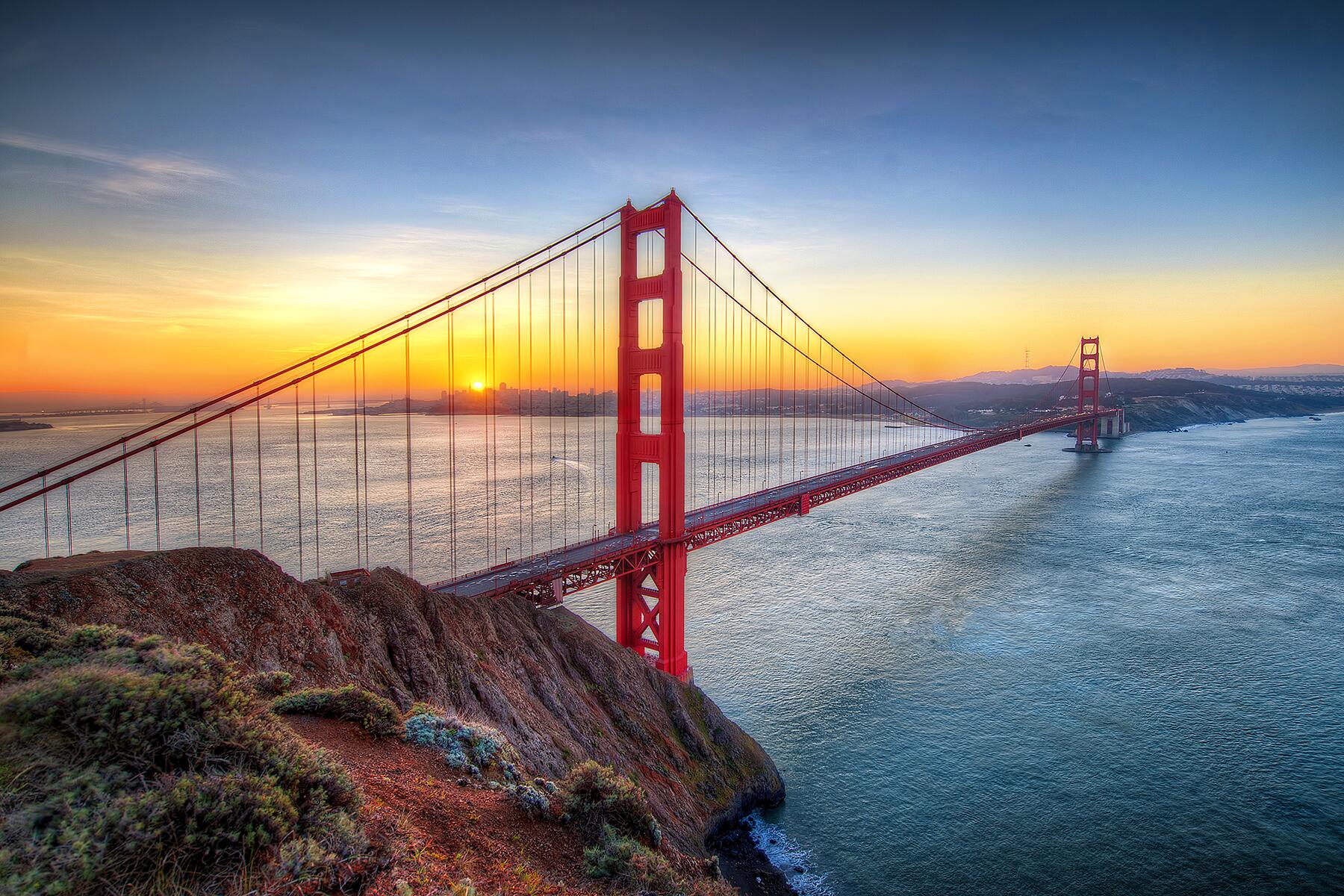

The city has been attacked by the media. But is the information accurate or overblown hysteria? And should tourists avoid San Francisco?
San Francisco has long been a flashpoint in our national discourse. Famous for steep hills, cable cars, and a live-and-let-live ethos, the city has more recently become emblematic in conservative circles for the perceived failings of progressive politicians like current city mayor London Breed and past mayor Gavin Newsom, who is now California’s governor.
What’s Happened in San Francisco?
During COVID-19, the city’s downtown core emptied as employers shifted to remote work policies. Many top San Francisco employers are in the tech sector, which has kept some of those policies in place, driving less traffic to the city’s downtown offices. Sky-high housing costs have helped drive increases in the city’s unhoused populations, and poverty-related crimes—thefts and drug use—have spiked, although the city’s violent crime rate has remained steady, and lower than many cities of similar size.
John Chachas, owner of longtime luxury retailer Gump’s, published an open letter in the San Francisco Chronicle decrying the “tyranny of the majority” and the strategies of Mayor Breed and Governor Newsom. Chachas exhorts the governor, mayor, and San Francisco Board of Supervisors to clean the city’s streets, remove homeless encampments, and enforce city and state ordinances.


Recommended Fodor’s Video
Separately, while many federal workers are returning to offices, the U.S. Department of Health and Human Services is telling its San Francisco workers to work from home indefinitely because of safety concerns at the agency’s downtown offices. Several retailers in Union Square have permanently closed because of a decrease in foot traffic and an increase in thefts.
So, Should You Visit San Francisco?
For prospective visitors, it can be difficult to pin down exactly what’s going on in the city, for its difficulties are often amplified by right-leaning media outlets.
San Francisco resident Randy Culpepper confirmed many of the reports. “There’s a sort of lawlessness,” he explains, noting that the security measures put in place by many retailers in Union Square, the Tenderloin area, and surrounding neighborhoods are onerous for shoppers. However, he also observes that several parts of the city are less affected by the spike in crime—neighborhoods like the Marina, North Beach, Portrero Hill, and Russian Hill are mostly unchanged.
Many visitors have also noticed a difference—particularly if they are driving in the city. Visiting New Jersey resident Greg Fitzgerald had his vehicle broken into in the middle of the day in North Beach in April 2023. Most of the belongings were later recovered by the police after they were discarded, but some expensive photo equipment was stolen. The rental car company was unsurprised, Fitzgerald recalled, saying they receive several similar reports from customers each day.
Even as tales of frustrations over the state of the city mount, there’s a grassroots effort to tackle misperception that San Francisco is wholly unlivable and impossible for visitors to enjoy. We Love SF encourages positive social media posts by San Francisco visitors and residents to counter the doom loop narrative that some media outlets portend for the city based on declines in building occupancy and fleeing retailers.
In counterpoint to negative media coverage, the apolitical group describes itself as “a civic pride initiative and campaign to redefine San Francisco’s image by sharing our positive experiences of the city we love. As the city faces many challenges in its time of need we believe this unified message of optimism creates immediate change and strengthens our community.”
The San Francisco Police department also advises residents and visitors alike to deter vehicle thefts by hiding valuables in their trunk or not leaving anything with any hint of value—sunglasses, electronics, luggage—visible inside their vehicles. Those who are victims of vehicle break-ins can fill out reports online and receive a receipt for insurance purposes.
The reputation of cities ebb and flow. Portions of San Francisco were similarly considered troubled in the 19th and early 20th Centuries. Today’s Jackson Square neighborhood was once an infamous red-light district known as Barbary Coast, where crime and lawlessness were so rampant the city’s citizens went so far as to form a vigilante justice committee in the 1850s to restore order.
San Francisco’s trials have been legendary—gold rushes, earthquakes, global pandemics—but the city has endured on the shoulders of engaged citizens determined to see their community via its better angels.
This negative narrative is a true story, not a corporate agenda. Residents, business owners, and corporations alike have been begging the city officials to fix the rampant crime issues.