Get FREE email communications from Fodor's Travel, covering must-see travel destinations, expert
trip planning advice, and travel inspiration to fuel your passion.
We've compiled the best of the best in San Francisco - browse our top choices for the top
things to see or do during your stay.
Sorry! We don't have any recommendations for San Francisco right now.
Sights Filter
Alcatraz
Embarcadero
Fodor's choice
Share This
Andresr | Dreamstime.com
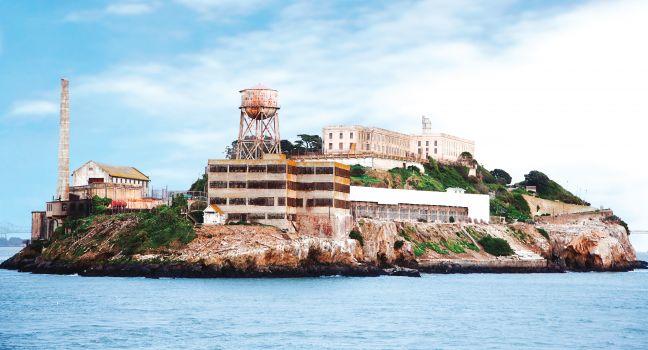
Thousands of visitors come every day to walk in the footsteps of Alcatraz's notorious criminals. The stories of life and death on "the Rock" may sometimes be exaggerated, but it's almost impossible to resist the chance to wander the cell block that tamed the country's toughest gangsters and saw daring escape attempts of tremendous desperation. Fewer than 2,000 inmates ever did time on the Rock, including Al "Scarface" Capone, Robert "The Birdman" Stroud, and George "Machine Gun Kelly."
Some tips for escaping to Alcatraz: (1) Buy your ticket in advance. Visit the website for Alcatraz Cruises to scout out available departure times for the ferry. (2) Dress smart. Bring a jacket to ward off the chill from the boat ride and wear comfortable shoes. (3) Consider going for the evening tour. The evening tour has programs not offered during the day, the bridge-to-bridge view of the city twinkles at night, and your "prison experience" will be amplified as darkness falls. (4) Be mindful of scheduled and limited-capacity talks.
The boat ride to the island is brief (15 minutes) but affords beautiful views of the city, Marin County, and the East Bay. The audio tour (which comes with each ticket and is highly recommended to actually listen to for the best visit experience) includes observations by guards and prisoners about life in one of America's most notorious penal colonies. Additional programs and ranger tours are listed at the dock once you arrive on the island. Plan your schedule to allow at least three hours for the visit and boat rides combined.
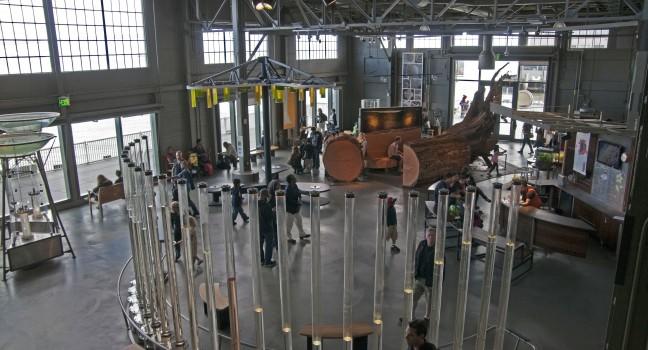
Walking into this fascinating museum of "science, art, and human perception" is like visiting a mad-scientist's laboratory, but one in which most of the exhibits are supersize and you can play with everything. Signature experiential exhibits include the Tinkering Studio and a glass Bay Observatory building, where the exhibits help visitors better understand what they see outside. Get an Alice-in-Wonderland feeling in the Distorted Room, where you seem to shrink and grow as you walk across the slanted, checkered floor. In the Shadow Box, a powerful flash freezes an image of your shadow on the wall; jumping is a favorite pose. More than 650 other exhibits focus on sea and insect life, ice crystals, electricity, patterns and light, novelties like bicycle-powered jump rope, the weather, and more. Don't miss a walk around the outside of the museum afterward for superb views and a lesson about the bay's sediment and water motion in the Bay Windows presentation.
Ferry Building
Embarcadero
Fodor's choice
Share This
Andreykr | Dreamstime.com
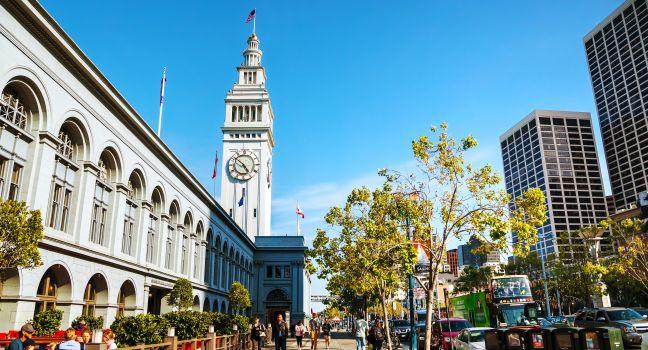
The jewel of the Embarcadero, erected in 1898 and now home to an outstanding food marketplace, is topped by a 230-foot clock tower modeled after the campanile of the cathedral in Seville, Spain. On the morning of April 18, 1906, the tower's four clock faces stopped around 5:15 am—moments after the great earthquake struck—and stayed still for 12 months.
Today San Franciscans flock to the street-level marketplace, stocking up on supplies from local favorites such as Acme Bread, Blue Bottle Coffee, El Porteño (empanadas), the gluten-free Mariposa Baking Company, and Humphry Slocombe (ice cream). For sit-down dining, there's the Hog Island Oyster Company and the seasonal Californian duo of Bouli Bar and Boulette's Larder. On the plaza side, the outdoor tables at Gott's Roadside and Fort Point Ferry Building offer great people-watching and excellent casual bites and sips. On Saturday morning the plazas outside the building buzz with an upscale farmers' market. Extending south from the piers north of the building to the Bay Bridge, the waterfront promenade out front is a favorite among joggers and picnickers, with a view of sailboats plying the bay. True to its name, the Ferry Building still serves actual ferries: from its eastern flank they sail to Sausalito, Larkspur, Tiburon, Angel Island, and the East Bay.
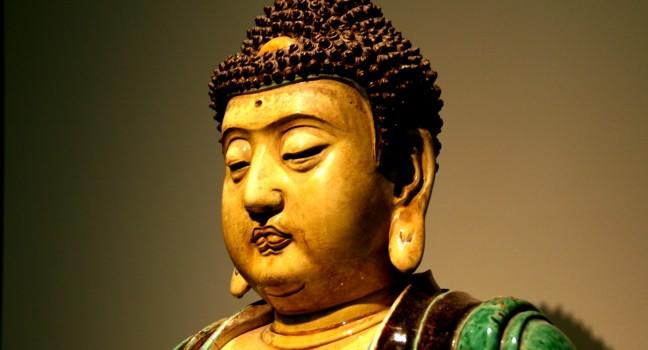
You don't have to be a connoisseur of Asian art to appreciate the expansive museum, whose monumental exterior conceals a light, open, and welcoming space. The fraction of the museum's collection on display (about 2,500 pieces out of 18,000-plus total) is laid out thematically and by region, making it easy to follow historical developments.
Begin on the third floor, where highlights of Buddhist art in Southeast Asia and early China include a large, jewel-encrusted, exquisitely painted 19th-century Burmese Buddha and clothed rod puppets from Java. On the second floor you can find later Chinese works, as well as exquisite pieces from Korea and Japan. The ground floor is devoted to temporary exhibits and the museum's wonderful gift shop. During spring and summer, visit on Thursday evenings for extended programs and sip drinks while a DJ spins tunes.
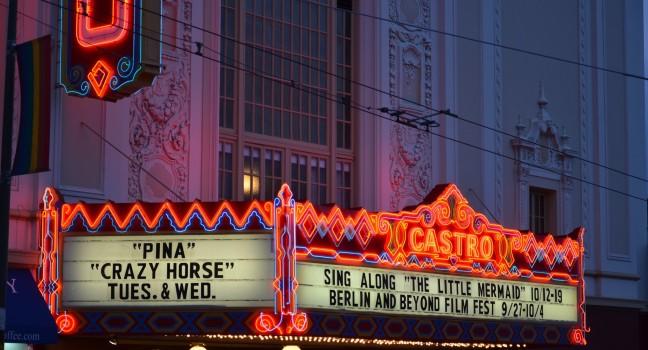
Here's a classic way to join in a beloved Castro tradition: grab some popcorn and catch a flick at this 1,500-seat art-deco theater built in 1922, the grandest of San Francisco's few remaining movie palaces. The neon marquee, which stands at the top of the Castro strip, is the neighborhood's great landmark. The Castro was the fitting host of 2008's red-carpet preview of Gus Van Sant's film Milk, starring Sean Penn as openly gay San Francisco supervisor Harvey Milk. The theater's elaborate Spanish baroque interior is fairly well preserved. Before many shows, the theater's pipe organ rises from the orchestra pit and an organist plays pop and movie tunes, usually ending with the Jeanette MacDonald standard "San Francisco" (go ahead, sing along). The crowd can be enthusiastic and vocal, talking back to the screen as loudly as it talks to them. The theater was under renovation until late 2025, which may change the nature of its availability. Check online for updates before planning your trip.
City Lights Bookstore
Fodor's choice
Share This
nito / Shutterstock
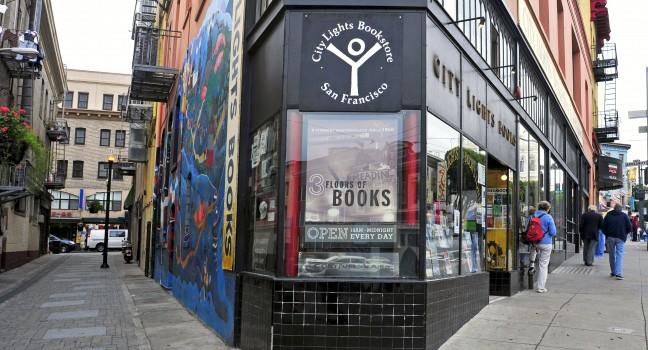
The exterior of this famous bookstore is iconic in itself, from the replica of a revolutionary mural destroyed in Chiapas, Mexico, by military forces to the art banners hanging above the windows. Designated a landmark by the city, the hangout of Beat-era writers and independent publishers remains a vital part of San Francisco's literary scene. Browse the three levels of poetry, philosophy, politics, fiction, history, and local zines to the beat of creaking wood floors.
Back in the day, writers like Allen Ginsberg and Jack Kerouac would read here (and even receive mail in the basement). The late poet Lawrence Ferlinghetti, who cofounded City Lights in 1953, cemented its place in history by publishing Ginsberg's Howl and Other Poems in 1956. The small volume was ignored in the mainstream—until Ferlinghetti and the bookstore manager were arrested for obscenity and corruption of youth. In the landmark First Amendment trial that followed, the judge exonerated both men. Howl went on to become a classic.
Stroll Kerouac Alley, branching off Columbus Avenue next to City Lights, to read quotes from Ferlinghetti, Maya Angelou, Confucius, John Steinbeck, and the street's namesake embedded in the pavement.
Golden Gate Bridge
Presidio
Fodor's choice
Share This
Pal Teravagimov / Shutterstock
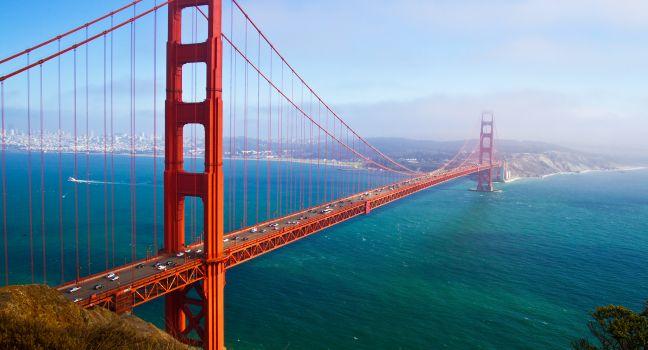
Instantly recognizable as an icon of San Francisco, the two reddish-orange towers of the majestic Golden Gate Bridge rise 750 feet over the Golden Gate strait at the mouth of San Francisco Bay, linking the city and Marin County. With its simple but powerful art-deco design, the 1.7-mile suspension span was built to withstand winds of more than 100 mph. It's also not a bad place to be in an earthquake: designed to sway almost 28 feet, the Golden Gate Bridge (unlike the Bay Bridge) was undamaged by the 1989 Loma Prieta quake. If you're walking on the bridge when it's windy, stand still and you can feel it swaying a bit.
Crossing the Golden Gate Bridge under your own power is exhilarating—a little scary, and definitely chilly. From the bridge's eastern-side walkway, the only side pedestrians are allowed on, you can take in the San Francisco skyline and the bay islands; look west for the wild hills of the Marin Headlands, the curving coast south to Lands End, and the Pacific Ocean. On sunny days, sailboats dot the water and brave windsurfers test the often-treacherous tides beneath the bridge. A vista point on the Marin County side provides a spectacular city panorama.
A structural engineer, dreamer, and poet named Joseph Strauss worked tirelessly for 20 years to make the bridge a reality, first promoting the idea of it and then overseeing design and construction. Though the final structure bore little resemblance to his original plan, Strauss guarded his legacy jealously, refusing to recognize the seminal contributions of engineer Charles Ellis. In 2007, the Golden Gate Bridge district finally recognized Ellis's role, though Strauss, who died less than a year after the bridge's opening day in 1937, would doubtless be pleased with the inscription on his statue, which stands sentry in the southern parking lot: "The Man Who Built the Bridge."
At the outdoor exhibits near the bridge's Welcome Center, you can learn about the features that make it art deco and read about the personalities behind its design and construction. For some pre– or post–bridge walk fuel, there is an Equator Coffees café in the historic Round House at the visitor's plaza. City Guides ( sfcityguides.org) offers free walking tours of the bridge every Thursday and Sunday at 11 am.
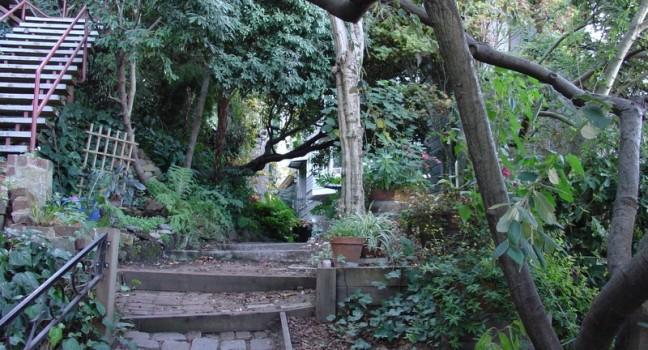
If you make it all the way up here, you may have the place all to yourself, or at least feel like you do. The park's terraces are carved from a hill so steep that it's difficult to see if anyone else is there or not. Locals love this park because it feels like a secret—one of the city's magical hidden gardens, with a meditative setting and spectacular views of the bay peeking out from among the trees. A poet, Oakland librarian, and niece of Mormon prophet Joseph Smith, Ina Coolbrith introduced Jack London and Isadora Duncan to the world of books. For years she entertained literary greats in her Macondray Lane home near the park. In 1915 she was named poet laureate of California.
Legion of Honor
Richmond
Fodor's choice
Share This
Andrew Zarivny / Shutterstock
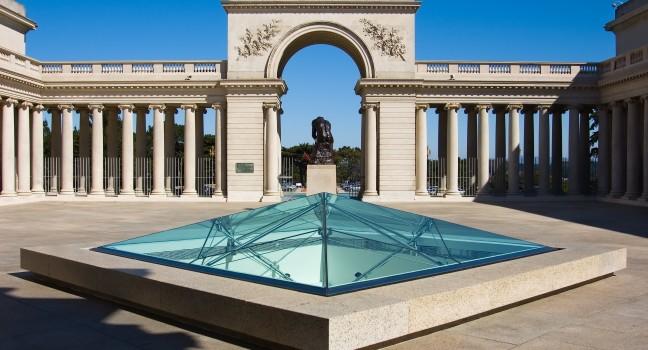
Built to commemorate soldiers from California who died in World War I and set atop cliffs overlooking the ocean, the Golden Gate Bridge, and the Marin Headlands, this beautiful Beaux Arts building in Lincoln Park displays an impressive collection of 4,000 years of ancient and European art. A pyramidal glass skylight in the entrance court illuminates the lower-level galleries, which exhibit prints and drawings, European porcelain, and ancient Assyrian, Greek, Roman, and Egyptian art. The 20-plus galleries on the upper level display European art (paintings, sculpture, decorative arts, and tapestries) from the 14th century to the present day. The Auguste Rodin collection includes two galleries devoted to the master and a third with works by Rodin and other 19th-century sculptors. An original cast of Rodin's The Thinker welcomes you as you walk through the courtyard. Also impressive is the 4,526-pipe Spreckels Organ; live concerts take advantage of the natural sound chamber produced by the building's massive rotunda. As fine as the museum is, the setting and view outshine the collection.
Lincoln Park
Richmond
Fodor's choice
Share This
(c) Russiangal | Dreamstime.com
Lincoln Park is a wild 275-acre park with windswept cliffs and panoramic views. The Coastal Trail, the park's most dramatic, leads out to Lands End; pick it up west of the Legion of Honor (at the end of El Camino del Mar) or from the parking lot at Point Lobos and El Camino del Mar. Time your hike to hit Mile Rock at low tide, and you might catch a glimpse of two wrecked ships peeking up from their watery graves.
Be careful if you hike here; landslides are frequent, and people have fallen into the sea by standing too close to the edge of a crumbling bluff top.
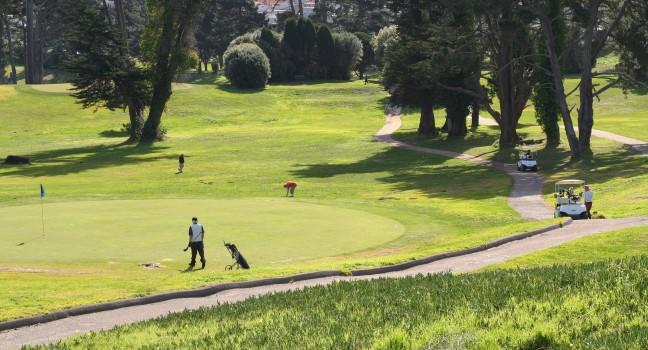
Lincoln Park's 18-hole golf course (www.lincolnparkgolfcourse.com) is on land that in the 19th century was the Golden Gate Cemetery. (When digging has to be done in the park, human bones still occasionally surface.) Next door on 33rd Avenue and California Street are the dazzling mosaic Lincoln Park Steps, which rival the 16th Avenue Steps and the Hidden Garden Steps in the Sunset District. They provide a delightful backdrop for contemplation or an Instagram photo op.
Lombard Street
Russian Hill
Fodor's choice
Share This
S.Borisov / Shutterstock
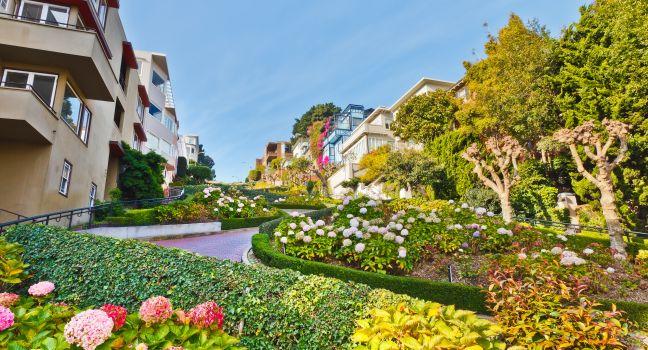
The block-long "Crookedest Street in the World" makes eight switchbacks down the east face of Russian Hill between Hyde and Leavenworth Streets. Join the line of cars waiting to drive down the steep hill, or avoid the whole mess and walk down the steps on either side of Lombard. You take in super views of North Beach and Coit Tower either way—though if you're the one behind the wheel, you'd better keep your eye on the road lest you become yet another of the many folks who ram the garden barriers. Can't stand the traffic? Thrill seekers of a different stripe may want to head two blocks south of Lombard to Filbert Street. At a gradient of 31.5%, the hair-raising descent between Hyde and Leavenworth streets is one of the city's steepest. Go slowly!
San Francisco has no shortage of impressive, grand homes, but Macondray Lane is the quintessential hidden garden. Enter under a lovely wooden trellis and proceed down a quiet, cobbled pedestrian lane lined with Edwardian cottages and flowering plants and trees. A flight of steep wooden stairs at the end of the lane leads to Taylor Street—on the way down you can't miss the bay views. If you've read any of Armistead Maupin's Tales of the City books, you may find the lane vaguely familiar; it's the thinly disguised setting for parts of the series.
Mission Dolores Park
Fodor's choice
Share This
(c) Rahurlburt | Dreamstime.com
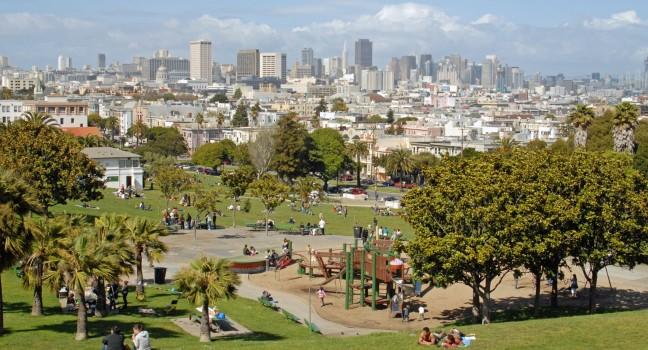
A two-square-block microcosm of life in the district, Mission Dolores Park is one of San Francisco's liveliest green spaces: dog lovers and their pampered pups congregate, kids play at the extravagant playground, and hipsters hold court, drinking beer and rosé cans on sunny days. (Fair warning: if it's over 70°F, the place can get packed like traffic at rush hour for picnic-blanket space.) During the summer, Dolores Park hosts movie nights, performances by the San Francisco Mime Troupe, and pop-up events and impromptu parties. Spend a warm day here—maybe sitting at the top of the park with a view of the city and the Bay Bridge—surrounded by locals and that laid-back, still-abundant San Francisco energy, and you may well find yourself plotting your move to the city. The best views are in the southwest corner, near the historic Golden Fire Hydrant that saved the neighborhood after the 1906 earthquake.
Palace of Fine Arts
Marina
Fodor's choice
Share This
Andreykr | Dreamstime.com
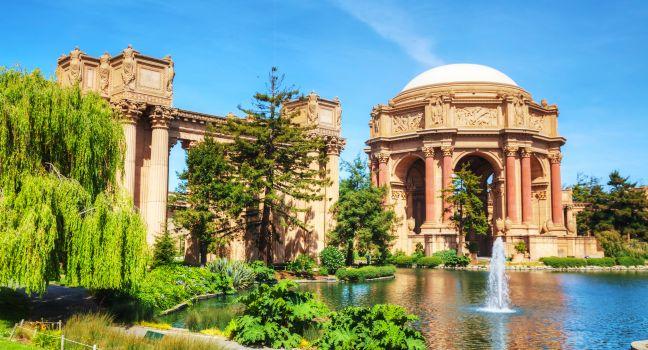
This stunning, rosy rococo palace on a lagoon seems to be from another world—it's the sole survivor of the many tinted-plaster structures (a temporary neoclassical city of sorts) built for the 1915 Panama-Pacific International Exposition, the world's fair that celebrated San Francisco's recovery from the 1906 earthquake and fire. The expo buildings originally extended about a mile along the shore. Bernard Maybeck designed this faux-Roman classic beauty, which was reconstructed in concrete and reopened in 1967.
The pseudo-Latin language adorning the Palace's exterior urns continues to stump scholars. The massive columns (each topped with four "weeping maidens"), great rotunda, and swan-filled lagoon have been used in countless fashion layouts, films, and wedding photo shoots. Other than its use for major events and exhibitions inside the building, it's really an outdoor architecture attraction that's perfect for an hour of strolling and relaxing. After admiring the lagoon, look across the street to the house at 3460 Baker Street. If the statues out front look familiar, they should—they're original casts of the "garland ladies" you can see in the Palace's colonnade.
Telegraph Hill and the Filbert Steps
Fodor's choice
Share This
trekandshoot / Shutterstock
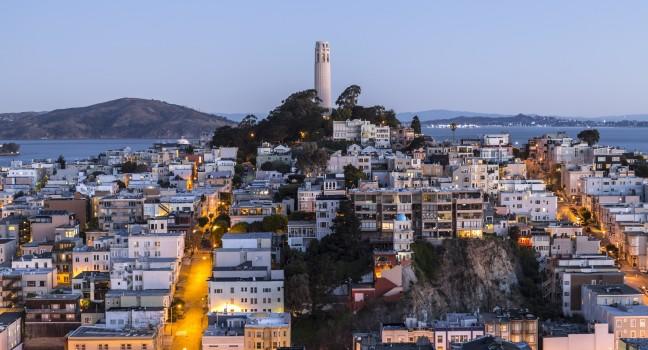
Residents here have some of the city's best views, as well as the most difficult ascents to their aeries. The hill rises from the east end of Lombard Street to a height of 284 feet and is capped by Coit Tower. If you brave the slope, though, you'll be rewarded with a "secret treasure" San Francisco moment. Filbert Street starts up the hill, then becomes the Filbert Steps when the going gets too steep. You can cut between the Filbert Steps and another flight, the Greenwich Steps, on up to the hilltop. As you climb, you pass some of the city's oldest houses and are surrounded by beautiful, flowering private gardens. In some places the trees grow over the stairs, so it feels like you're walking through a green tunnel; elsewhere, you'll have wide-open views of the bay. The cypress trees that grow on the hill are a favorite roost of local avian celebrities, the wild parrots of Telegraph Hill; you'll hear the cries of the cherry-headed conures if they're nearby. The name comes from the hill's status as the first Morse code signal station back in 1853.
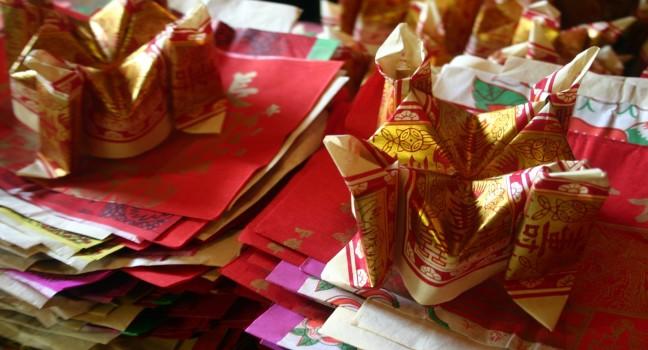
In 1852, Day Ju, one of the first three Chinese to arrive in San Francisco, dedicated this temple to the Queen of the Heavens and the Goddess of the Seven Seas, and the temple looks largely the same today as it did more than a century ago. Duck into the inconspicuous doorway, climb three flights of stairs, and be surrounded by the aroma of incense in this tiny, altar-filled room. In the entryway, elderly ladies can often be seen preparing "money" to be burned as offerings to various Buddhist gods or as funds for ancestors to use in the afterlife. Hundreds of red-and-gold lanterns cover the ceiling; the larger the lamp, the larger its donor's contribution to the temple. Gifts of oranges, dim sum, and money left by the faithful, who kneel while reciting prayers, rest on altars to different gods. Tin How presides over the middle back of the temple, flanked by one red and one green lesser god. Taking photographs is not allowed.
Alamo Square Park
Western Addition
Fodor's choice
Share This
Whether you've seen them on postcards or on the old TV show Full House, the colorful "Painted Ladies" Victorian houses are some of San Francisco's world-renowned icons. The signature view of these beauties with the downtown skyline in the background is from the east side of this hilly park. Tourists love the photo opportunities, but locals also adore the park's tennis courts, dog runs, and ample picnic area—with great views, of course. After taking plenty of photos, swing by the park's northwest corner and admire the William Westerfeld House (1198 Fulton St.), a splendid five-story late-19th-century Victorian mansion. If it's a sunny day, grab picnic provisions from Bi-Rite Market. Thursday through Sunday, the Lady Falcon Coffee Club truck is stationed in the park, offering a great caffeine pick-me-up.
Alta Plaza Park
Pacific Heights
Fodor's choice
Share This
Golden Gate Park's longtime superintendent, John McLaren, designed this 12-acre park in the early 1900s, modeling its steep south-facing terracing on that of the Grand Casino in Monte Carlo. At any time of day, you're guaranteed to find San Francisco's exercise warriors running up the park's south steps. From the top of those steps, you can see Marin to the north, downtown to the east, Twin Peaks to the south, and Golden Gate Park to the west. Kids love the many play structures at the large, enclosed playground at the top; dogs love the off-leash area in the park's southeast corner.
Angel Island State Park
Fodor's choice
Share This
For an outdoorsy adventure and some fascinating though sometimes disturbing history, consider a day at this island northwest of Alcatraz, the bay's largest natural island. Used by the Coast Miwok as a favored camp, explored by Spaniards in 1775, and declared a U.S. military reserve 75 years later, the island was used as a screening ground for Asian, mostly Chinese, immigrants—who were often held for months, even years, before being granted entry—from 1910 until 1940. You can visit the restored Immigration Station, from the dock where detainees landed to the barracks where you can see the poems in Chinese script they etched onto the walls.
In 1963 the government designated Angel Island a state park. Today people come for picnics, hikes (such as one to the top of Mt. Livermore and a scenic 5-mile path that winds around the island's perimeter), and tram tours that explain the park's history. Golden Gate Ferry is the only Angel Island ferry service with departures from San Francisco; boats leave from the Ferry Building.
Baker Beach
Fodor's choice
Share This
West of the Golden Gate Bridge is a mile-long stretch of soft sand beneath steep cliffs, beloved for its spectacular views and laid-back vibe (read: small chance you'll see naked people here on the northernmost end). Its isolated location makes it rarely crowded, but many San Franciscans know that there is no better place to take in the sunset than this beach. Kids love climbing around the old Battery Chamberlin. This is truly one of those places that inspires local pride. Amenities: parking (no fee); toilets. Best for: nudists; solitude; sunsets.
California Academy of Sciences
Golden Gate Park
Fodor's choice
Share This
With its native plant–covered living roof, retractable ceiling, three-story rainforest, gigantic planetarium, living coral reef, and frolicking penguins, the California Academy of Sciences is one of the city's most spectacular treasures. Dramatically designed by Renzo Piano, it's an eco-friendly, energy-efficient adventure in biodiversity and green architecture. Moving away from a restrictive role as a museum that cataloged natural history, the academy these days is all about sustainability and the future, but the locally beloved dioramas in African Hall remain.
It's best to look at the academy's floor plan to design your visit before you arrive. Here's the quick version: head left from the entrance to the wooden walkway over otherworldly rays in the Philippine Coral Reef, then continue to the Swamp to see Claude, the famous albino alligator. Swing through African Hall and study the penguins, take the elevator up to the living roof, then return to the main floor and get in line to explore the Rainforests of the World. You'll end up below ground in the Amazonian Flooded Rainforest, where you can explore the academy's other aquarium exhibits. The popular adults-only NightLife event, held every Thursday evening, includes after-dark access to all exhibits, as well as special programming and a full bar. Considering the hefty price of admission, start early and take advantage of in-and-out privileges to take a break. Buy tickets a few days ahead for the best rate.
Chase Center
Mission Bay
Fodor's choice
Share This
The National Basketball Association's Golden State Warriors are the headliners of this spectacular arena and the city's marquee indoor entertainment complex. In just six years since it opened, Chase Center has already become a San Francisco institution for more than just sports. It is also a major stop for entertainers like Jerry Seinfeld, Madonna, and Katy Perry. Don't miss a walk around the beautiful grounds; a highlight is Olafur Eliasson's stunning Seeing Spheres installation on the bay side of the arena. Across the street from that outdoor art is Bayfront Park, unveiled in 2024 after years of construction. At just over 5 acres, it features excellent views from its grassy hills, basketball courts, and steel design elements made from the old Bay Bridge eastern span.
The area around Chase Center is called Thrive City, a nod to sponsor Kaiser Permanente's (a local health-care provider) slogan. Some locals call it "Contrived City" since it's a glossy made-up neighborhood within a neighborhood. Regardless of opinions on the naming, the focal point of Thrive City is the impressive plaza on the Third Street side of Chase Center. It's where fans from all over the Bay Area gather to celebrate Warriors wins. There is a popular bleacher-like seating amphitheater facing the plaza that includes a statue of the late former mayor Ed Lee, who helped bring the Warriors from Oakland to San Francisco in the 2010s. The other main highlight of Thrive City is dining. A few popular San Francisco establishments have restaurant or bar concepts here, including Gott's Roadside, Dumpling Time, Harmonic Brewing, Che Fico, Señor Sisig, and Burma Love, plus GluGlu wine bar by Dogpatch's Ungrafted restaurant and the massive Splash Sports Bar from the Pacific Cocktail Haven team.
City Hall
Civic Center
Fodor's choice
Share This
This imposing 1915 structure with its massive gold-leaf dome—higher than the U.S. Capitol's—is as close to a palace as you'll find in San Francisco: the classic granite-and-marble behemoth was modeled after St. Peter's Basilica in Rome. Architect Arthur Brown Jr., who was also behind Coit Tower and the War Memorial Opera House, designed an interior with grand columns and a sweeping central staircase. The 1899 structure it replaced had taken 27 years to erect, but it collapsed in about 27 seconds during the 1906 earthquake.
City Hall was seismically retrofitted in the late 1990s, but the sense of history remains palpable, and you can learn about it on a free tour. Some noteworthy events that have taken place here include the hosing of civil-rights and freedom-of-speech protesters (1960); the assassinations of Mayor George Moscone and Harvey Milk (1978); the torching of the lobby by angry members of the gay community in response to the light sentence given to their killer (1979); and the first domestic partnership registrations of gay couples (1991). In 2004, Mayor Gavin Newsom took a stand against then-current state and federal law by issuing marriage licenses to same-sex partners.
Across Polk Street from City Hall is Civic Center Plaza, with an outdoor café, flower beds, and a playground. This sprawling space is generally clean but somewhat grim, as many homeless people hang out here.
Conservatory of Flowers
Golden Gate Park
Fodor's choice
Share This
Whatever you do, be sure to at least drive by the Conservatory of Flowers—it's too darn pretty to miss. The gorgeous, white-framed 1878 glass structure is topped with a 14-ton glass dome. Stepping inside the giant greenhouse is like taking a quick trip to the rainforest, with its earthy smell and humid warmth. The undeniable highlight is the Aquatic Plants section, where lily pads float and carnivorous plants dine on bugs to the sounds of rushing water.
On the east side of the conservatory (to the right as you face the building), cypress, pine, and redwood trees surround the Dahlia Garden, which blooms in summer and fall. Adding to the allure are temporary special exhibits; a recurring holiday-season model-train display punctuated with mini buildings, found objects, and dwarf plants; night blooms; and a butterfly garden that returns periodically. To the west is the Rhododendron Dell, which contains 850 varieties, more than any other garden of its kind in the country. It's a favorite local Mother's Day picnic spot.
Grace Cathedral
Nob Hill
Fodor's choice
Share This
Not many churches can boast an altarpiece by Keith Haring and two labyrinths, but this one, the country's third-largest Episcopal cathedral, does. The soaring Gothic-style structure took 14 (often interrupted) years to build, beginning in 1927 and eventually wrapping up in 1964. The gilded bronze doors at the east entrance were taken from casts of Lorenzo Ghiberti's incredible Gates of Paradise, designed for the Baptistery in Florence, Italy. A sculpture of St. Francis by Beniamino Bufano greets you as you enter.
The 34-foot-wide limestone labyrinth is a replica of the 13th-century stone maze on the floor of Chartres Cathedral. All are encouraged to walk the ⅛-mile-long labyrinth, a ritual based on the tradition of meditative walking. There's also a granite outdoor labyrinth on the church's northeast side. The AIDS Interfaith Chapel, to the right as you enter, contains a bronze triptych by the late artist Keith Haring (a gift from Yoko Ono) and panels from the AIDS Memorial Quilt. The church offers self- and docent-led tours. Especially dramatic times to view the cathedral are during Tuesday-evening yoga (6:15 pm), Thursday-night evensong (5:15 pm), and special holiday programs.
Jackson Square Historic District
Financial District
Fodor's choice
Share This
This was the heart of the Barbary Coast of the Gay '90s—the 1890s, that is. Although most of the red-light district was destroyed in the fire that followed the 1906 earthquake, the remaining old redbrick buildings, many of them now occupied by advertising agencies, law offices, and antiques firms, retain hints of the romance and rowdiness of San Francisco's early days.
With its gentrified Gold Rush–era buildings, the 700 block of Montgomery Street just barely evokes the Barbary Coast days, but this was a colorful block in the 19th century and on into the 20th. Writers Mark Twain and Bret Harte were among the contributors to the spunky The Golden Era newspaper, which occupied No. 732 (now part of the building at No. 744).
Restored 19th-century brick buildings line charming Hotaling Place, a quiet lane that connects Washington and Jackson streets; it's named for the A. P. Hotaling Company whiskey distillery, the largest liquor repository on the West Coast in its day. The view of the Transamerica Pyramid from Hotaling Place is one of the most photographed vantage points in the city and is a remarkable juxtaposition of this neighborhood's 19th- and 20th-century history.
Today, Jackson Square is best known for its excellent collection of restaurants, cafés, art galleries (Gallery Japonesque at 824 Montgomery Street is well worth a stop if it's open), and upscale-stylish boutiques.
Louise M. Davies Symphony Hall
Civic Center
Fodor's choice
Share This
Fascinating and futuristic, this 2,739-seat hall is the home of the San Francisco Symphony. The glass wraparound lobby and pop-out balcony are visible from outside, as is the Henry Moore bronze sculpture on the sidewalk. The hall's 59 adjustable Plexiglas acoustical disks cascade from the ceiling like hanging windshields. Concerts range from typical symphonic fare to more unusual performances, such as singer Al Green and film screenings with a live orchestra performing the score.
Presidio Tunnel Tops
Presidio
Fodor's choice
Share This
With how seamlessly the Presidio Tunnel Tops landscape flows from the Presidio's Main Parade Lawn downhill to Crissy Field, it's almost impossible to envision the two not being connected. Yet, that was always the case until this impressive 14-acre green space with 1.8 miles of winding walking paths was completed in 2022. It's a park that is both function (bringing together two important areas atop a highway tunnel) and form (beautifully designed by James Corner Field Operations, the same firm that designed New York City's acclaimed High Line elevated park).
The Presidio Tunnel Tops are a marquee destination for many reasons, but there's no escaping that the park is best known for its panoramic view of the Golden Gate Bridge. There's plenty more to do, from grabbing lunch from a visiting food truck or letting kids explore the impressive 2-acre Outpost playground that tells the Presidio's extensive history and evokes its natural habitat. There are three lawn areas for picnicking, a Campfire Circle where ranger talks are given, and 200,000 plants to gaze at.
Altogether, it's a fun breath of fresh air—and it's hard to believe that you're literally on top of the busy 101 highway. After exploring the Presidio Tunnel Tops, make sure to head over to their lesser-known "above the highway" park sibling, Battery Bluff. This park doesn't have the activities or amenities that makes the Tunnel Tops such a draw, but it's worth a visit for the views and to see the four preserved historic gun batteries.
Salesforce Park
Financial District
Fodor's choice
Share This
Ask a hundred San Franciscans about Salesforce Park and the city's tallest building, the 1,070-foot Salesforce Tower, and you'll get a hundred different opinions. The tower opened in 2018 and is the second-tallest building west of the Mississippi. This splashy, impossible-to-miss, rocket-shape glass high-rise dominates the city's skyline and has become the symbol of the city's tech-money elite. It is photogenic, but some feel it dominates photos of the city too often. Building visits are limited to employees and people coming for business purposes.
The true highlight of the Salesforce mini-neighborhood is Salesforce Park, a sprawling urban park with 13 ecosystems atop the four-block-long Salesforce Transit Center. It's a downtown green gem, a true civic accomplishment. This is a favorite destination for families, walkers, and workers trying to get fresh air on their lunch break. A beer garden from Barebottle Brewing Co. in Bernal Heights has swiftly become the happy hour destination of choice for downtown office workers. For a weekday coffee break, there's a branch of local favorite Andytown Coffee Roasters on the seventh floor of the spectacular 181 Fremont skyscraper; it's attached to the park via skybridge. The park can be reached via elevators or escalators (a thrilling glass-enclosed gondola from ground level to the park has been closed in recent years but might reopen at some point in 2025).
San Francisco Museum of Modern Art (SFMOMA)
SoMa
Fodor's choice
Share This
Opened in 1935, the San Francisco Museum of Modern Art was the first museum on the West Coast dedicated to modern and contemporary art, and after a three-year expansion designed by Snøhetta, it emerged in 2016 as one of the largest modern art museums in the country and the revitalized anchor of the Yerba Buena arts district. With gallery space over seven floors, the museum displays only a portion of its more than 33,000-work collection and has numerous temporary exhibits. Allow at least two hours here; ambitious art fans could spend a full day. The museum’s holdings include art from the Doris and Donald Fisher Collection, one of the world's greatest private collections of modern and contemporary art. Highlights include deep collections of works by German abstract expressionist Gerhard Richter and American painter Ellsworth Kelly and an Agnes Martin gallery. The third floor is dedicated to photography. Also look for seminal works by Diego Rivera, Alexander Calder, Matisse, and Picasso. Don’t miss the third-floor sculpture terrace or the fifth floor's eye-catching "One-way colour tunnel" by Olafur Eliasson under the museum's signature oculus. Around 45,000 square feet of the museum is free to the public and contains a handful of works. Save time by reserving timed tickets online.
Subscribe to Newsletter
Sign up for Travel Tips & News
I want emails from Fodor's Travel with travel information and promotions. I can unsubscribe
any time using the unsubscribe link at the end of all emails.
Thank you for your interest!
Look out for our newsletters with travel tips and special offers.
Sign up for Travel Tips & News
By signing up for the
newsletter, I agree to the Privacy Policy. You must check the box to subscribe
Thank you for your interest!
Look out for our newsletters with travel tips and special offers.