164 Best Sights in Chicago, Illinois

Background Illustration for Sights

We've compiled the best of the best in Chicago - browse our top choices for the top things to see or do during your stay.

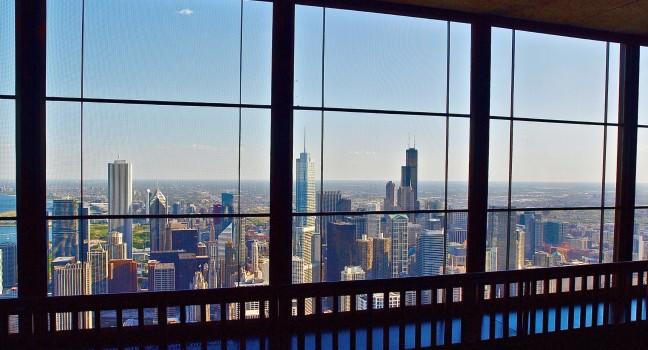
875 N. Michigan Avenue (formerly the John Hancock Center) and 360 Chicago

Near North Side Fodor's choice
Chicago skyline view from John Hancock Observatory
(c) Sidneyboot | Dreamstime.com

Designed by Skidmore, Owings & Merrill, this multipurpose skyscraper is distinguished by its tapering shape and enormous X braces, which help stabilize its 100 stories. Soon after it went up in 1970, it earned the nickname "Big John." No wonder: it's 1,127 feet tall (the taller east tower is 1,506 feet counting its antennae). Packed with retail space, parking, offices, a restaurant, and residences, it has been likened to a city within a city. Like the Willis Tower, which was designed by the same architectural team, this skyscraper offers views of four states on clear days. To see them, ascend to the 94th-floor observatory—now dubbed 360 Chicago ($30). While there, visitors can grab a cocktail, beer, wine, hot drink or nonalcoholic beverage at Bar 94, which can only be accessed with a General Admission ticket. Thrill seekers can pay an additional fee to take advantage of the tower's most exciting feature, The Tilt ($8), which has eight windows that tilt downward to a 30-degree angle, giving you a unique perspective on the city below. Those with vertigo might prefer a seat in the bar of the 96th-floor Signature Lounge; the tab will be steep, but you don't pay the observatory fee and you'll be steady on your feet.

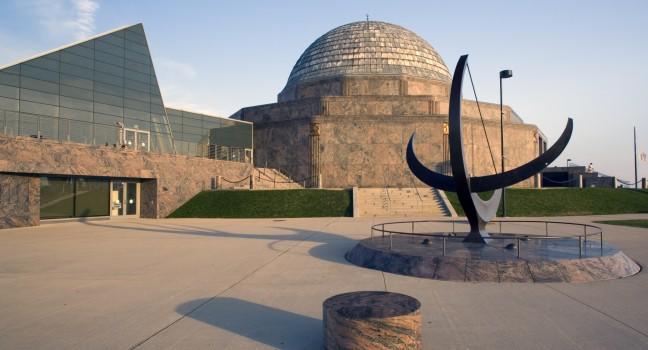
Adler Planetarium and Astronomy Museum

South Loop Fodor's choice
Adler Planetarium, located in downtown Chicago.
Henryk Sadura / Shutterstock

Taking you on a journey through the stars to unlock the mysteries of our galaxy and beyond, the Adler tells amazing stories of space exploration through high-tech exhibits and immersive theater experiences. Artifacts and interactive elements bring these fascinating tales of space and its pioneers down to earth. The Grainger Sky Theater gives an up-close view of stunning space phenomena, and the magnificent imagery is so realistic that it might only be surpassed by actual space travel. The newest permanent exhibit is The Universe: A Walk Through Space and Time. A spectacular projection showcases the enormity of the universe, and touch screens let you investigate diverse and beautiful objects from deep space.

Art Institute of Chicago

Chicago Loop Fodor's choice
CHICAGO, ILLINOIS - SEPTEMBER 8: The Modern Wing of the Art Institute of Chicago designed by architect Renzo Piano on September 8, 2012 in Chicago, Illinois.
luca85/Shutterstock

Come for the sterling collection of old masters and impressionists (an entire room is dedicated to Monet); linger over the extraordinary and comprehensive photography collection; take in a number of fine American works; and discover paintings, drawings, sculpture, and design spanning the ancient to the contemporary world.

With its flanking lions and marble lobby, the Michigan Avenue main building was once part of the World's Columbian Exposition. It opened as the Art Institute on December 8, 1893. While the collection is best known for its impressionist and postimpressionist pieces, visitors will find works from a vast range of periods and places, including Greek, Roman, Byzantine, European, Asian, African, and Native American art. Such iconic works as Grant Wood's American Gothic and Edward Hopper's Nighthawks can be found in the American galleries. Chicago favorites like the Thorne Miniature Room and Marc Chagall's stained-glass American Windows are must-sees as well.

After the Renzo Piano–designed Modern Wing opened in 2009, the Art Institute became one of the largest art museums in the country. The 264,000-square-foot building contains the finest 20th- and 21st-century art in many mediums.

111 S. Michigan Ave., Chicago, IL, 60603, USA
312-443–3600
Sight Details
$32
Closed Tues. and Wed.

Something incorrect in this review?

Recommended Fodor's Video

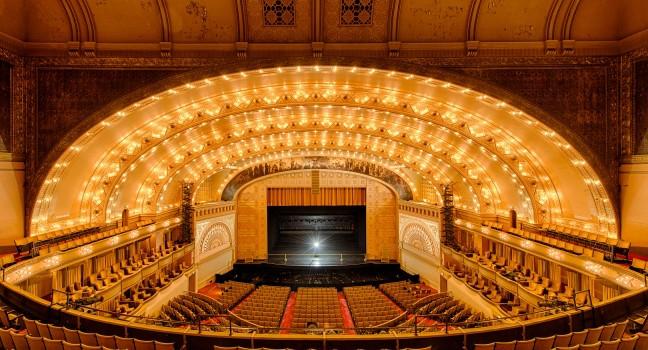
Auditorium Theatre

South Loop Fodor's choice
CHICAGO - OCTOBER 14: Empty Auditorium Theatre of Roosevelt University on October 14, 2012 in Chicago, Illinois.
Nagel Photography / Shutterstock

Hunkered down across from Grant Park, this 110,000-ton granite-and-limestone behemoth was an instant star when it debuted in 1899, and it didn't hurt the careers of its designers, Dankmar Adler and Louis H. Sullivan, either. Inside were offices, a 400-room hotel, and a 4,300-seat state-of-the-art theater with electric lighting and an air-cooling system that used 15 tons of ice per day. Adler managed the engineering—the theater's acoustics are renowned—and Sullivan ornamented the space using mosaics, cast iron, art glass, wood, and plaster. During World War II the building was used as a Servicemen's Center. Then Roosevelt University moved in and, thanks to the school's Herculean restoration efforts, the theater is again one of the city's premiere performance venues. Tours are offered most Sundays, Mondays, and Wednesdays.

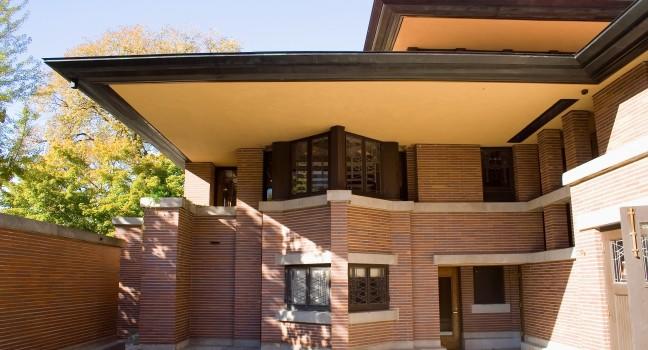
Frederick C. Robie House

Fodor's choice
Frank Llloyd Wright's Robie House. Oak Park, Chicago, Illinois.
(c) Tedholt | Dreamstime.com

Named one of the 10 most significant buildings of the 20th century by the American Institute of Architects, the 9,063-square-foot Robie House (1910) is long and low. Massive overhangs shoot out from the low-pitched roof, and windows run along the facade in a glittering stretch. Inside, Wright's "open plan" echoes the great outdoors, as one space flows into another, while sunlight streaming through decorative leaded windows bathes the rooms in patterns. The original dining room had a table with lanterns at each corner, giving the illusion that the table itself was a separate room. Other Wright innovations include a three-car garage (now the gift shop), an intercom, and a central vacuum-cleaner system.

Lincoln Park Zoo

Lincoln Park Fodor's choice
Lincoln Park Zoo, Chicago, Illinois, USA
stevegeer / iStockphoto

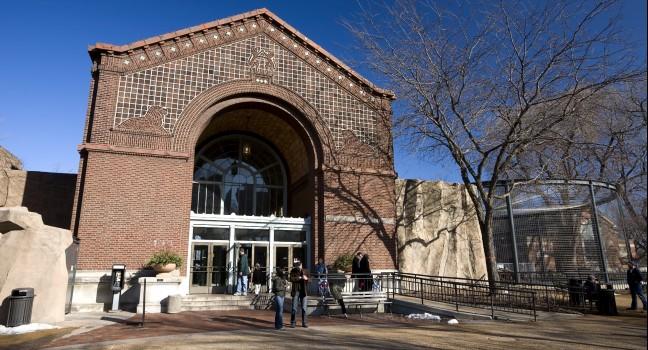
At this urban enclave near Lake Michigan, you can watch snow monkeys unwind in the hot springs of the Regenstein Macaque Forest or ogle gorillas and chimpanzees in the sprawling Regenstein Center for African Apes, which has three separate habitats complete with bamboo stands, termite mounds, and 5,000 feet of swinging vines. Brave big cats (separated by a window, of course) outside the Pepper Family Wildlife Center, a 2021 redesign of the zoo’s lion habitat conceived with input from an app that collected data on the star residents’ behavior. Animals both slithery (pythons) and strange (sloths) reside in the glass-domed Regenstein Small Mammal and Reptile House, while the big guys (hippos, giraffes, and black rhinos) are in the Regenstein African Journey.

Bird lovers should make a beeline to the McCormick Bird House, which contains extremely rare species—including the Bali mynah, Guam rail, and Guam Micronesian kingfisher, some of which are extinct in the wild. Families with little ones in tow will also want to see Farm-in-the-Zoo (with its barnyard animals and learning centers), and the Lionel Train Adventure ride. Be sure to leave time for a ride (or two) on the Endangered Species Carousel, featuring a menagerie of 48 rare and endangered animals.

Shutterbugs will want to make a beeline for the Nature Boardwalk at the zoo's southern reaches. In addition to pretty indigenous vegetation, it's home to the Peoples Gas Education Pavilion, a massive honeycomb sculpture that frames the downtown skyline, making for an impressive snapshot. 

2400 N. Cannon Dr, Chicago, IL, 60614, USA
312-742–2000
Sight Details
Free (additional fee for rides); parking from $30

Something incorrect in this review?

Magnificent Mile

Near North Side Fodor's choice
Michigan Avenue Bridge and Magnificent Mile in Chicago, IL, USA.
(c) Dibrova | Dreamstime.com

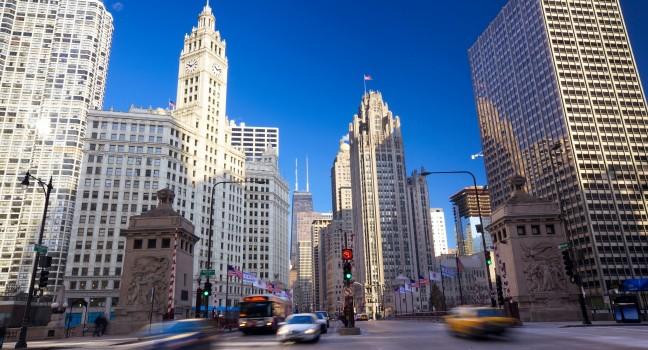
Michigan Avenue, or Mag Mile as some call it, is a potpourri of historic buildings, upscale boutiques, department stores, and posh hotels. (It is also the city's most popular place for people-watching.) Among its jewels are the Tribune Tower, the Wrigley Building, 875 North Michigan Avenue (formerly the John Hancock Center), the Drake Hotel, and the Historic Water Tower.

Millennium Park

Chicago Loop Fodor's choice
CHICAGO, ILLINOIS AUGUST 21: The popular Jay Pritzker Pavilion in Millennium Park on a beautiful summer day in downtown on August 21, 2011 in Chicago.
Fotoluminate LLC / Shutterstock

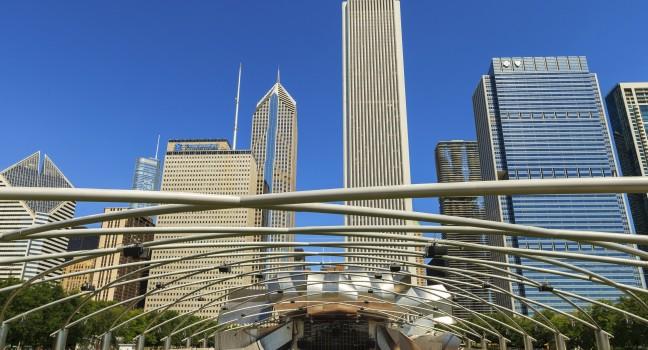
With Anish Kapoor's giant, polished-steel Cloud Gate sculpture (affectionately known as "The Bean"), the fun fountains, and a Disney-esque music pavilion, this park quickly stole the hearts of Chicagoans and visitors alike when it opened in 2004. The showstopper is Frank Gehry's stunning Jay Pritzker Pavilion. Dramatic ribbons of stainless steel stretching 40 feet into the sky look like petals wrapping the music stage. The 1,525-seat Harris Theater for Music and Dance provides an indoor alternative for fans of the performing arts.

In the park's southwest corner, the Crown Fountain features dozens of Chicagoans' faces rotating through on two 50-foot-high glass block–tower fountains. When a face purses its lips, water shoots out its "mouth." Kids love it, and adults feel like kids watching it. More conventional park perks include the lovely Lurie Garden (a four-season delight) and the seasonal McCormick Tribune Ice Rink, which opens for public skating each winter.

Museum of Contemporary Art Chicago

Near North Side Fodor's choice
Museum Of Contemporary Art Chicago.
(c) Sianamira | Dreamstime.com

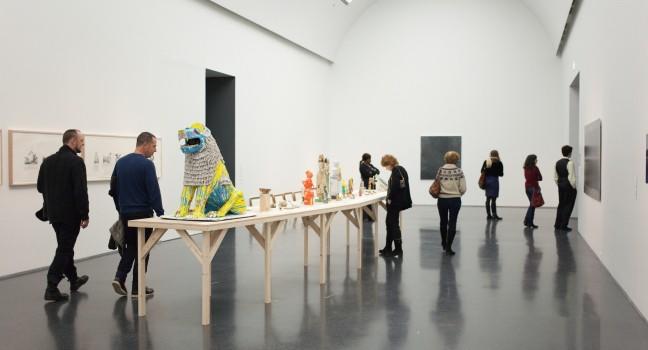
A group of art patrons who felt the great Art Institute was unresponsive to modern work founded the MCA in 1967, and it has remained a renegade art museum ever since. It doesn't have any permanent exhibits; this lends a feeling of freshness but also makes it impossible to predict what will be on display at any given time. Special exhibits are devoted mostly to original shows you can't see anywhere else.

220 E. Chicago Ave., Chicago, IL, 60610, USA
312-280–2660
Sight Details
$15 suggested donation; free Tues. for Illinois residents
Closed Mon.

Something incorrect in this review?

National Museum of Mexican Art

Pilsen Fodor's choice
Wood carving artwork by Artist Jacobo Angeles Ojeda.
Wood carving artwork by Artist Jacobo Angeles Ojeda by Gozamos

The largest Latino cultural museum in the country (and the first Latino one accredited by the American Alliance of Museums) is definitely worth a look. Its galleries house impressive displays of contemporary, traditional, and Mesoamerican art from both sides of the border, as well as vivid exhibits that trace immigration woes and political struggles. The 20,000-piece permanent collection includes pre-Cuauhtemoc artifacts, textiles, folk art, paintings, prints, and drawings. Every fall the giant Day of the Dead exhibit stuns Chicagoans with its altars from artists across the U.S. and Mexico.

The Rookery

Chicago Loop Fodor's choice
The main lobby of the Rookery building with its glass ceiling and amazing stairs. Chicago downtown, Illinois, United States.
(c) Afagundes | Dreamstime.com

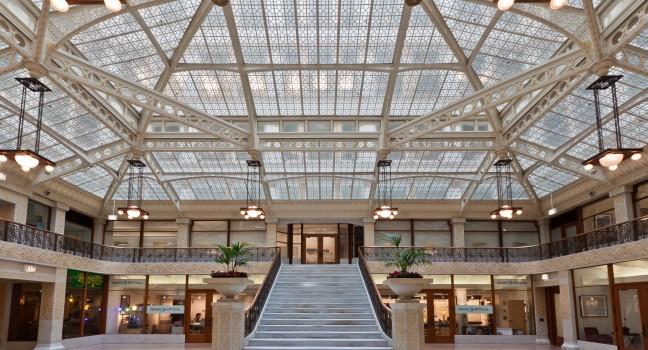
This 11-story structure, with its eclectically ornamented facade, got its name from the pigeons and politicians who roosted at the temporary city hall constructed on this site after the Great Chicago Fire of 1871; the structure didn't last long, and The Rookery replaced it. Designed in 1885 by Burnham & Root, who used both masonry and a more modern steel-frame construction, The Rookery was one of the first buildings in the country to feature a central court that brought sunlight into interior office spaces. Frank Lloyd Wright, who kept an office here for a short time, renovated the two-story lobby and light court, eliminating some of the ironwork and terra-cotta and adding marble scored with geometric patterns detailed in gold leaf. The interior endured some less tasteful alterations after that, but it has since been restored to the way it looked when Wright completed his work in 1907.

Shedd Aquarium

South Loop Fodor's choice
John G. Shedd Aquarium on edge of Lake Michigan.
(c) Del7891 | Dreamstime.com

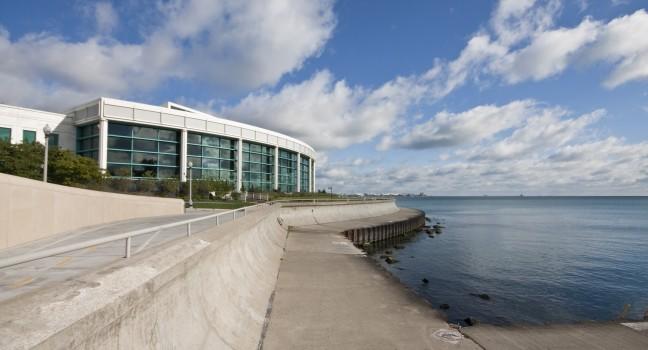
One of the most popular aquariums in the country, the Shedd houses more than 32,500 creatures from around the world. A shark-filled 400,000-gallon tank is part of "Wild Reef," which explores marine biodiversity in the Indo-Pacific. The exhibit also has colorful corals, stingrays that slide by under your feet, and other surprising creatures, all from the waters around the Philippines. Whales and dolphins live in the spectacular Oceanarium, which has pools that seem to blend into Lake Michigan. The aquatic show here stars dancing belugas, leaping dolphins, and comical penguins. Be sure to get an underwater glimpse of the dolphins and whales through the viewing windows on the lower level, where you can also find a bunch of information-packed, hands-on activities. In 2022, the Shedd implemented a dynamic pricing plan for non-Chicago residents: advance ticket prices will vary based on projected attendance. Lines for the Shedd often extend all the way down the neoclassical steps. Buy a ticket in advance to avoid the interminable wait, or spring for a CityPASS.

Tribune Tower

Near North Side Fodor's choice
Top of Tribune Tower in Chicago in perspective shot taken from below.
(c) Steveheap | Dreamstime.com

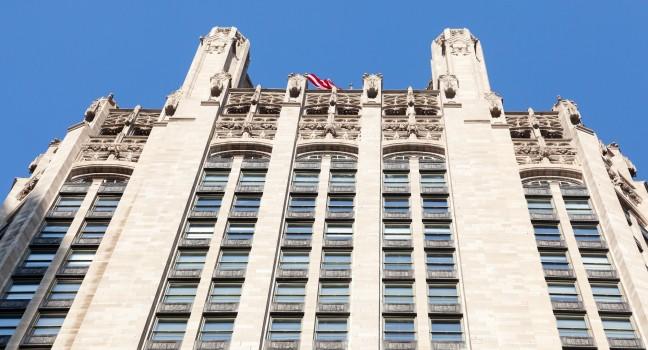
Big changes have arrived at this iconic tower, which opened in 1925 to house the Chicago Tribune. Sold by the Tribune Company to CIM Group and Golub & Company for $240 million in 2016, the neo-gothic structure is no longer home to the newspaper, and WGN’s final broadcast there took place in 2018. Now the interior is 162 luxury residences with more than 55,000 square feet of indoor amenities. Visitors can still see fragments from famous sites, including the Taj Mahal and the Alamo, embedded in the building’s façade.

Willis Tower

Chicago Loop Fodor's choice
The Willis Tower (formerly Sears Tower) glass windows skyscraper in downtown Chicago, Illinois, United States. The EL mass transport system, pedestrians and cars on the street.
(c) Afagundes | Dreamstime.com

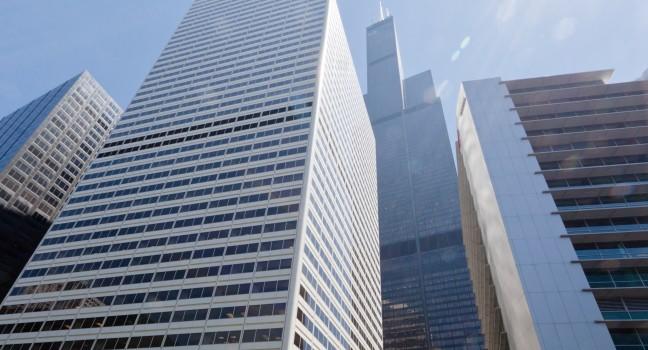
Designed by Skidmore, Owings & Merrill in 1974, the former Sears Tower was the world's tallest building until 1996. The 110-story, 1,730-foot-tall structure may have lost its title and even changed its name, but it’s still tough to top the Willis Tower's 103rd-floor Skydeck—on a clear day it offers views of Illinois, Michigan, Wisconsin, and Indiana. Enter on Jackson Boulevard to take the ear-popping ride up. ( Check the visibility ratings at the security desk before you decide to ascend.) Video monitors turn the 70-second elevator ride into a thrilling trip. Interactive exhibits inside the observatory bring Chicago's dreamers, schemers, architects, musicians, and sports stars to life; and computer kiosks in six languages help international travelers key into Chicago hot spots. For many visitors, though, the highlight (literally) is stepping out on the Ledge, a glass box that extends 4.3 feet from the building, making you feel as if you're suspended 1,353 feet in the air.

Wrigley Field

Wrigleyville Fodor's choice
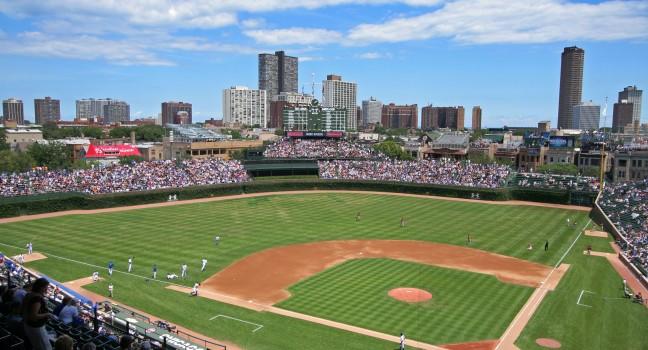
Wrigley Field, Chicago, Illinois, USA
Mike Liu / Shutterstock

You need not be a baseball fan to enjoy a visit to the nation's second-oldest major league ballpark—venerable, ivy-covered Wrigley Field. This hallowed stadium hosted its first major league game in 1914 and has been home to the Chicago Cubs since 1916; the Bears also played here for a half-century before decamping to Soldier Field in 1970. The original hand-operated scoreboard is still in use today, and even though updates and renovations have added plenty of digital screen space, the character that makes this place so special remains intact. If you look up along Sheffield and Waveland Avenues beyond the bleachers, you can see the rooftop patios where baseball fans pay high prices to cheer for the home team; devoted "ball hawks" sit in lawn chairs on Sheffield, waiting for foul balls and home runs to fly their way. While you're here, check out the Harry Caray statue commemorating the late Cubs announcer, or hang out after the game in Gallagher Way, the new plaza built after the team was acquired from the Tribune Company by the Ricketts family. Big-name concerts by the likes of Pearl Jam and Bruce Springsteen are also staged here when the team is out of town.

The 606

Fodor's choice

Similar to New York City’s High Line, this abandoned elevated rail line—open since 2015—is now a fun place to walk or bike and take in art all at once. Edgy, splashy and bright murals are depicted along the 2.7-mile route. The route runs through Wicker Park, Humboldt Park, Bucktown, and Logan Square, making it an appealing way to neighborhood hop without getting snarled in the traffic below. Take along some water and sunscreen; on summer days the more exposed stretches of the trail get rather sunbaked. 

Andersonville

Andersonville Fodor's choice

Just northwest of Uptown there's a neighborhood that still shows signs of the Swedish settlers who founded it. Andersonville has some great restaurants and bakeries, many of which pay tribute to its Scandinavian roots. In winter months, be sure to drop by Simon's Tavern ( 5210 North Clark) for a glass of glögg (hot mulled wine)—it's a traditional favorite. Helping anchor the area is the Women & Children First bookstore ( 5233 North Clark), which stocks an extensive selection of feminist tomes and children's lit.

Bahá'í Temple House of Worship

Fodor's choice

Your mouth is sure to drop to the floor the first time you lay eyes on this stunning structure, a nine-sided building that incorporates architectural styles and symbols from many of the world's religions. With its delicate lacelike details and massive dome, the Louis Bourgeois design emphasizes the 19th-century Persian origins of the Bahá'í religion. The formal gardens are as symmetrical and harmonious as the building they surround. The Bahá'í faith advocates spiritual unity, world peace, racial unity, and equality of the sexes. Stop by the welcome center to examine exhibits that explain it; you can also ask for a guide to show you around.

Brookfield Zoo

Fodor's choice

There are more than 3,000 animals at this gigantic zoo and highlights include the 7½-acre Great Bear Wilderness exhibit, a sprawling replica of North American woodlands for the zoo's population of grizzlies, polar bears, bison, Mexican gray wolves, and bald eagles. Watch the polar bears from the popular underwater viewing area. Elsewhere, monkeys, otters, birds, and other rainforest fauna cavort in a carefully constructed setting of trees, shrubs, pools, and waterfalls at Tropic World, while at the Living Coast you can venture through passageways to see sharks, rays, and Humboldt penguins.

One of the best educational exhibits is Habitat Africa, where you can explore the dense forest section with animals like the okapi (an animal that looks like a cross between a zebra, giraffe, and horse). In the savanna section, which has a water hole, termite mounds, and characteristic rock formations, you can spy such tiny animals as the 22-inch-tall klipspringer antelope.

The Swamp is about as realistic as you would want an exhibit on swamps to be. It has a springy floor and open habitats with low-flying birds that vividly demonstrate the complex ecosystems. For hands-on family activities, visit the Hamill Family Play Zoo, where kids can play zookeeper, gardener, or veterinarian. Special events—most notably Holiday Magic, which lights up the zoo on select December evenings—are also worth checking out. If you don't want to trek around the 216-acre property, don't worry. You can hop aboard a motorized safari tram ($6) on weekends in warm weather months.

Chicago Architecture Center

Chicago Loop Fodor's choice

After more than 25 years flying under the radar inside the Railway Exchange Building a few blocks south, the Chicago Architecture Foundation opened this sparkling new home in 2018. The 20,000-square-foot facility features interactive exhibits about the city's built environment, and it sits right above the dock where the center's indispensable river cruise tours board. Tours by bus and on foot also depart from the facility, which houses a terrific gift shop as well.

Chicago Botanic Garden

Fodor's choice

Among the 28 different gardens here are the three-island Malott Japanese Garden, the five-acre Evening Island, and the Grunsfeld Children's Growing Garden. Three big greenhouses showcase desert, tropical, and semitropical climates where beautiful and fragrant flowers bloom year-round. Weather permitting, 35-minute tram tours are offered daily and are free with admission from late April through late October. Special summer exhibitions include the 7,500-square-foot Model Railroad Garden with 17 garden-scale trains traveling around nearly 50 models of American landmarks, all made from natural materials. Butterflies & Blooms, a 2,800-square-foot white mesh enclosure, is filled with hundreds of colorful butterflies interacting with plant life; both are free with admission.

Chicago Children's Museum

Near North Side Fodor's choice

"Hands-on" is the operative concept at this brightly colored Navy Pier anchor. Kids can tinker with tools, climb through three stories of tunnels, play at being a firefighter, dig for dinosaur fossils, and create a masterpiece in the Art Studio.

Chicago Cultural Center

Chicago Loop Fodor's choice

Built in 1897 as the city's original public library, this huge building houses the Chicago Office of Tourism Visitor Information Center, as well as a gift shop, galleries, and a concert hall. Designed by the Boston firm Shepley, Rutan & Coolidge—the team behind the Art Institute of Chicago—it's a palatial affair notable for its Carrara marble, mosaics, gold leaf, and the world's largest Tiffany glass dome.

Chicago History Museum

Lincoln Park Fodor's choice

Seeking to bring Chicago's often complicated history to life, this museum has several strong permanent exhibits, including Chicago: Crossroads of America, which celebrates homegrown cultural contributions from urban blues to the skyscraper and demystifies tragedies like the Haymarket Affair, in which a bomb thrown during a labor rally in 1884 led to eight anarchists being convicted of conspiracy. In Sensing Chicago, kids can take a spin on a penny-farthing bicycle or dress up like a Chicago-style hot dog. Don't miss City on Fire: Chicago 1871, which immerses visitors in the destruction and aftermath of the notorious inferno that displaced one-third of the city’s residents in just two days. Like most of the exhibits here, it's presented in a way that's comprehensible to kids, but substantive enough for adults. 

Dovetail Brewery

North Center Fodor's choice

When they opened in 2016, Dovetail was just the second lager-focused brewery to open in Chicago (following the now sadly closed Metropolitan Brewing). Working from a small taproom in North Center, they quickly developed a reputation for well-crafted European-style beers like their creamy hefeweizen and smoky rauchbier. It didn’t take long for them to stretch into other types of lager like the roasty Czech dark or a hearty dunkelweizen. Their brewery tours are reliably among the best in the city: tourgoers get to sample different types of water to learn how the chemistry of H20 can affect the overall taste of a beer, then see the brewhouse which uses a century-old tank originally built for Germany’s Bavarian State Brewery Weihenstephan to help create their intricately crafted beers. You’ll also get to see the barrelhouse and coolship, where their spontaneously fermented wild beers age and take on even more complex flavors.

DuSable Museum of African American History

Fodor's choice

Sitting alongside the lagoons of Washington Park, the DuSable Museum, a Smithsonian Institution affiliate, offers an evocative exploration of the African American experience. The most moving displays are about slavery—rusted shackles used on slave ships are among the poignant and disturbing artifacts—as well as Chicago's role in the civil rights movement. The museum also has a significant art collection.

Farnsworth House

Fodor's choice

This 1951 minimalist dwelling by Ludwig Mies Van der Rohe sits just down the Fox River from Aurora. Constructed of steel, wood, and travertine marble, it appears to nearly float against a backdrop of serene river views and woodland landscapes. Now operated as a museum by the National Trust for Historic Preservation, Farnsworth House may only be seen by guided tour (advance reservations are required). Note that the house is a half-mile walk from the visitor center.

14520 River Rd., Plano, IL, 60545, USA
630-552–0052
Sight Details
$30, purchase at least 24 hrs in advance
Closed Mon. and Tues. Tours available Apr.–Nov.

Something incorrect in this review?

Field Museum

South Loop Fodor's choice

More than 400,000 square feet of exhibit space fill this gigantic museum, which explores cultures and environments from around the world. Interactive displays examine such topics as the secrets of Egyptian mummies, the art and innovations of people living in the Ancient Americas, and the evolution of life on Earth. Originally funded by Chicago retailer Marshall Field, the museum was founded in 1893 to hold material gathered for the World's Columbian Exposition; its current neoclassical home opened in 1921. The museum holds the world's best dinosaur collections but the star of the show is 65-million-year-old "Sue," the largest and most complete Tyrannosaurus rex fossil ever found. Don't hesitate to take toddlers to the Field. In the Crown Family PlayLab, kids two to six years old can play house in a re-created pueblo and compare their footprints with a dinosaur's.

Frank Lloyd Wright Home and Studio

Fodor's choice

Wright designed and built his first home in 1889, on the strength of a $5,000 loan from his then employer and mentor, seminal Chicago architect Louis Sullivan. Only 22 at the time, he would continually remodel the modest dwelling over the next two decades, so a visit here provides a unique look into the architect's developing ideas. This is where Wright's nascent architectural philosophy first bloomed; the house was intended not only to hold his rapidly growing family, but also to showcase his then-revolutionary notions. It combines elements of the 19th-century Shingle Style with subtle innovations that stamp its originality.

Wright established his own practice in 1893 and added a studio to the house in 1898. In 1909, he spread his innovative designs across the United States and abroad (at this time he also abandoned his wife and six children for the wife of a client). He sold his home and studio in 1925, which was later turned into apartments that eventually fell into disrepair. In 1974, a group of local citizens calling itself the Frank Lloyd Wright Home and Studio Foundation, together with the National Trust for Historic Preservation, embarked on a 13-year restoration that returned the building to its 1909 appearance. Today, Wright's Oak Park home and studio are owned by the Frank Lloyd Wright Trust.

Wright's home, made of brick and dark shingles, is filled with earth-toned spaces. The architect's determination to create an integrated environment prompted him to design the natural wood furniture as well—though his apparent lack of regard for comfort is often the subject of commentary. The lead windows have colored-glass designs, and several rooms have skylights or other indirect lighting. A spacious barrel-vaulted playroom on the second floor includes a hidden piano for the children's theatrical productions. The adjacent studio is made up of four spaces—an office, a large reception room, an octagonal library, and an octagonal drafting room that uses a chain harness system rather than traditional beams to support its balcony, roof, and walls.

To see the interior, you must take one of the small-group tours, led by well-informed guides who discuss the architecture, point out artifacts from the family's life, and tell amusing stories about the rambunctious Wright clan. Reservations are advised: without one, you'll need to arrive as early as possible to snag a spot—not later than early afternoon to make the last tour on any given day. Tours begin at the Frank Lloyd Wright Home and Studio Museum Shop, which carries architecture-related books and gifts. You can pick up a map noting other examples of Wright's work that are within easy walking or driving distance; guided tours and self-guided audio ones of the neighborhood are also available.

The annual Wright Plus Architectural Housewalk on the third Saturday in May offers interior tours of private homes designed by Wright and his contemporaries in Oak Park and other nearby villages.

Garfield Park Conservatory

West Loop Fodor's choice

Escape winter's cold or revel in summer sunshine inside this huge "landscape art under glass" structure, which houses tropical palms, spiny cacti, and showy blooms. A children's garden has climbable leaf sculptures and a tube slide that winds through trees. The Sugar from the Sun exhibit focuses on the elements of photosynthesis—sunlight, air, water, and sugar—in a full-sensory environment filled with spewing steam, trickling water, and chirping sounds. Don't miss the historic Jens Jensen–designed Fern Room with its lagoon, waterfalls, and profusion of ferns. On-site events include botanical-themed fashion shows, seasonal flower shows, and great educational programing.

300 N. Central Park Ave., Chicago, IL, 60624, USA
773-638–1766
Sight Details
Free
Closed Mon. and Tues.
Reservations required

Something incorrect in this review?