150 Best Sights in Barcelona, Spain

Background Illustration for Sights

We've compiled the best of the best in Barcelona - browse our top choices for the top things to see or do during your stay.

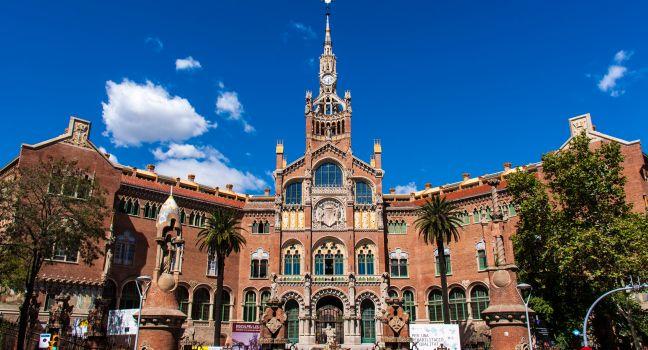
Antic Hospital de la Santa Creu

El Raval Fodor's choice
Hospital of the Holy Cross and Saint Paul, (Hospital de la Santa Creu i de Sant Pau), Barcelona, Catalonia, Spain, UNESCO World Heritage Site.
Filipe Matos Frazao/Shutterstock

Founded in the 10th century, one of Europe's earliest medical complexes contains some of Barcelona's most impressive Gothic architecture. The buildings that survive today date from mainly to the 15th and 16th centuries; the first stone for the hospital was laid by King Martí el Humà (Martin the Humane) in 1401.

From the entrance on Carrer del Carme, the first building on the left is the 18th-century Reial Acadèmia de Medicina de Catalunya (Royal Academy of Medicine); the surgical amphitheater is kept just as it was in the days when students learned by observing dissections. (One assumes that the paupers' hospital next door was always ready to oblige with cadavers.) The Academy is open to the public for guided tours on Wednesday and Saturday morning.

Across the way on the right is the gateway into the patio of the Casa de la Convalescència, where patients who survived their treatment in the hospital were moved for recuperation. It now houses the Institute for Catalan Studies. The walls of the forecourt are covered with brightly decorated scenes of the life of St. Paul in blue and yellow ceramic tiles. The story begins with the image to the left of the door to the inner courtyard, recounting the moment of the saint's conversion: Savle, Savle, quid me persegueris? ("Saul, Saul, why do you persecute me?").

The ceramist Llorenç Passolas also designed the late-17th-century tiles around the inner patio. The image of St. Paul in the center of the pillared courtyard, over what was once a well, pays homage to the building's first benefactor, Pau Ferran. Look for the horseshoes, two of them around the keyholes, on the double wooden doors in the entryway: tokens of good luck for the afflicted who came here to recover—again, in reference to benefactor Ferran, from ferro (iron), as in ferradura (horseshoe).

Through a gate to the left of the Casa de Convalescència is the garden-courtyard of the hospital complex, the Jardins de Rubió i Lluc, centered on a baroque cross and lined with orange trees. On the right is the Biblioteca de Catalunya ( Carrer de l'Hospital 56  93/270–2300  www.bnc.cat  Closed Sun.), Catalonia's national library and—with some 2 million volumes in its collection—second only to Madrid's Biblioteca Nacional. The stairway under the arch, leading up to the library, was built in the 16th century. The Gothic well to the left of the arch is from the 15th century, as is the little Romeo-and-Juliet balcony in the corner to the left of the doors to the Escola Massana academy of design. The library itself is spectacular: two parallel halls—once the core of the hospital—230 feet long, with towering Gothic arches and vaulted ceilings, designed in the 15th century by the architect of the church of Santa Maria del Pi, Guillem Abiell. This was the hospital where Antoni Gaudí was taken, unrecognized and assumed to be a pauper, after he was struck by a trolley on June 7, 1926.

Among the library's collections are archives recording Gaudí's admittance and photographs of the infirmary and the private room where he died. The staggering antiquarian resources here go back to the earliest history of printing, and range from silver medieval book covers to illuminated manuscripts from the Llibre Vermell (Red Book) of medieval Catalonian liturgical music, to rare editions of Cervantes. 

Leave the complex through the heavy wooden doors to Carrer Hospital, and turn left toward La Rambla. The next set of doors leads to the Capella (Chapel) of the hospital, an interesting art space well worth a visit. Built in the early 15th century, on the site of what had been the old Hospital de Colom (founded in 1219), it is now a showcase for promising young artists, chosen by a jury of prominent museum directors and given this impressive space, with its Romanesque tunnel vault and medieval arches, to exhibit their work.

Hospital 56 (or Carme 45), Barcelona, 08001, Spain
93-317–1686-Reial Acadèmia de Medicina
Sight Details
€11 (Reial Acadèmia de Medicina de Catalunya tour, Wed. and Sat.)
Biblioteca de Catalunya and Capella closed Sun.

Something incorrect in this review?

Casa Milà

Eixample Dreta Fodor's choice
The Eixample, Barcelona, Spain
© Ross Brinkerhoff / Fodor’s Travel

Usually referred to as "La Pedrera" (the Stone Quarry), this building, with its curving stone facade undulating around the corner of the block, is one of Gaudí's most celebrated yet initially reviled designs. Topped by chimneys so eerie they were nicknamed espantabruixes (witch scarers), the Casa Milà was unveiled in 1910 to the horror of local residents. The exterior has no straight lines; the curlicues and wrought-iron foliage of the balconies, sculpted by Josep Maria Jujol, and the rippling, undressed stone, made you feel, as one critic put it, "as though you are on board a ship in an angry sea."

Gaudí's rooftop chimney park, alternately interpreted as veiled Saharan women or helmeted warriors, is as spectacular as anything in Barcelona, especially in late afternoon when the sunlight slants over the city into the Mediterranean. Inside, the handsome Àtic de la Balena (Whale Attic) has excellent critical displays of Gaudí's works from all over Spain, as well as explanations of his theories and techniques. The Pis dels veïns (Tenants’ Apartment) is an interesting look into the life of a family that lived in La Pedrera in the early 20th century. People still occupy the other apartments.

In the summer, lines of visitors waiting to see the Pedrera can stretch a block or more; if you sign up for "La Pedrera: Night Experience" you'll tour the building by night, with a spectacular illuminated projection. Check the website for tour times and book online. Bookings are essential. At Talents Jazz (Thursday and Friday summer nights) the Àtic de la Balena and the roof terrace are open for drinks and jazz concerts, starting at 8 pm. Priced at €38, admission includes a visit to the whale attic, the concert, and a drink.

Fundació Joan Miró

Montjuïc Fodor's choice
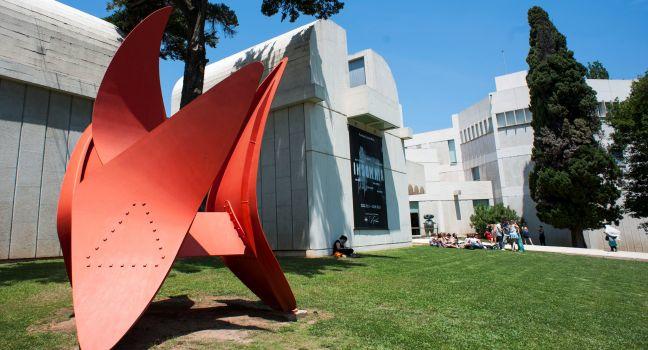
Sculpture, Miro, Fundacio Miro, Barcelona, Spain
© Ross Brinkerhoff / Fodor’s Travel

The masterpieces by native Barcelona artist Joan Miró (1893–1983) at this museum include paintings, sculpture, and textile works from all periods of his life. They coexist with temporary exhibitions of 20th- and 21st-century artists, and, in the newer Espai 13 space, cutting-edge audiovisual art.

The airy white building, with panoramic views north over Barcelona, was designed by the artist's close friend and collaborator Josep Lluís Sert and opened in 1975. Extensions were added by Sert's pupil Jaume Freixa in 1988 and 2000. Miró's playful and colorful style, filled with Mediterranean light and humor, seems a perfect match for the surroundings. Various patios, as well as the roof terrace, are home to notable Miró sculptures, including the bronze model for Moon, Sun and One Star with a dramatic backdrop of the city. The artist rests in the cemetery on Montjuïc's southern slopes. The café-restaurant, with indoor seating and an outdoor terrace, is abuzz with locals at the weekends.

Parc de Montjuïc s/n, Barcelona, 08038, Spain
93-443–9470
Sight Details
€14 online, €15 at the museum, free with Barcelona Card
Closed Mon.

Something incorrect in this review?

Recommended Fodor's Video

La Boqueria

La Rambla Fodor's choice
Fresh food market, Barcelona.
Matthew Dixon / Shutterstock

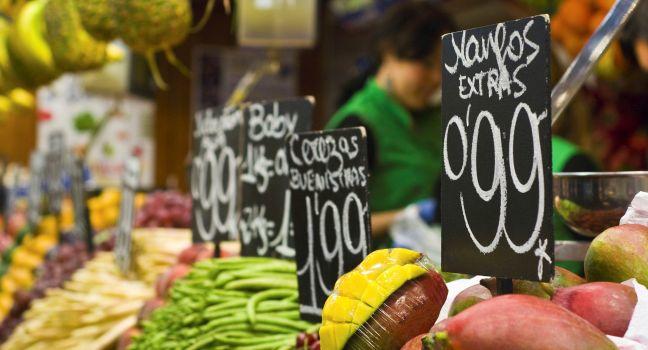
Barcelona's most spectacular food market, also known as the Mercat de Sant Josep, is an explosion of life and color. As you turn in from La Rambla, you're greeted by bar-restaurants serving tapas at counters and stall after stall selling fruit, herbs, veggies, nuts, candied preserves, cheese, ham, fish, poultry, and other types of provender. Although you can avoid the worst of the crowds by browsing before 8 am and after 5 pm, most of the time, you'll have to wade through throngs of both locals and visitors. Indeed, the market has become so popular, that tourist groups of 15 people or more are banned from entering between 8 am to 3 pm Monday through Saturday.

Under a Moderniste hangar of wrought-iron girders and stained glass, the market occupies a neoclassical square built in 1840, after the original Sant Josep convent was torn down, by architect Francesc Daniel Molina. The Ionic columns around the edges of the market were part of the mid-19th-century square, uncovered in 2001 after more than a century of neglect.

Highlights include the sunny greengrocers' market outside (to the right if you enter from La Rambla), along with Pinotxo (Pinocchio), just inside to the right, where owner Juanito Bayén and his family serve some of the best food in Barcelona. The secret? "Fresh, fast, hot, salty, and garlicky." If it's too crowded to find a seat, the Kiosko Universal, over toward the port side of the market, and Quim de la Boqueria, both offer delicious alternatives. Don't miss the fruits del bosc (fruits of the forest) specialty stand at the back of the market, with its display of wild mushrooms, herbs, nuts, and berries.

Monasterio de Sant Pau del Camp

El Raval Fodor's choice
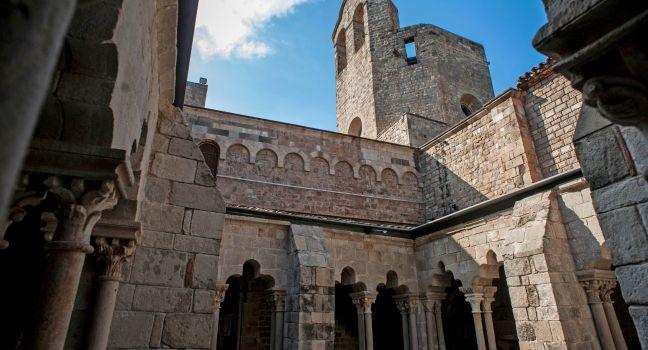
Nestled amid modern playgrounds and apartment buildings, this church is one of the hidden treasures of Barcelona. Sant Pau del Camp is small compared with other churches in the city, but as a  wonderfully preserved example of Romanesque construction, its s
© Ross Brinkerhoff / Fodor’s Travel

Barcelona's oldest monastic church was originally outside the city walls (del camp means "in the fields") and was a Roman cemetery as far back as the 2nd century, according to archaeological evidence. A Visigothic belt buckle found in the 20th century confirmed that Visigoths used the site as a cemetery between the 2nd and 7th centuries. What you see now was built in 1127 and is the earliest Romanesque structure in Barcelona. Elements of the church—the classical marble capitals atop the columns in the main entry—are thought to be from the 6th and 7th centuries. Sant Pau is bulky and solid, featureless (except for what may be the smallest stained-glass window in Europe, high on the facade facing Carrer Sant Pau), with stone walls 3 feet thick or more; medieval Catalan churches and monasteries were built to be refuges for the body as well as the soul, bulwarks of last resort against Moorish invasions—or marauders of any persuasion. Check local events listings for musical performances here; the church is an acoustical gem. The tiny cloister is Sant Pau del Camp's best feature, and one of Barcelona's hidden treasures. Look carefully at the capitals that support the Moorish-influenced Mudejar arches, carved with biblical scenes and exhortations to prayer. This penumbral sanctuary, barely a block from the heavily trafficked Avinguda del Paral·lel, is a gift from time.

Sant Pau 99, Barcelona, 08001, Spain
93-441–0001
Sight Details
Free when Mass is celebrated; entrance €6, guided tours €10 (Sun. at 12:45 pm)
Cloister closed Sun. during Mass; no tours in mid-Aug.

Something incorrect in this review?

Museu d'Art Contemporani de Barcelona (MACBA)

El Raval Fodor's choice
Museum of Contemporary Art of Barcelona (MACBA)
(c) MaxiSports | Dreamstime.com

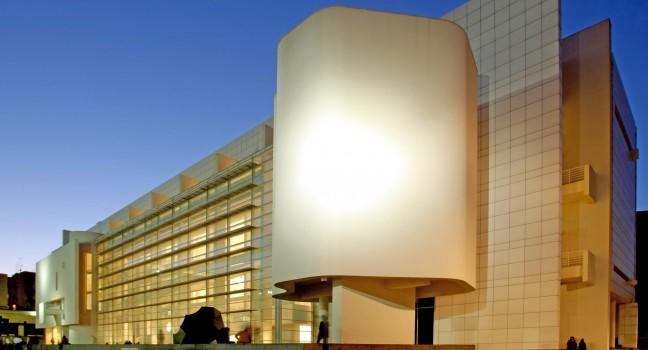
Designed by American architect Richard Meier in 1992, this gleaming explosion of light and geometry in El Raval houses a permanent collection of contemporary art, and also regularly mounts special temporary exhibitions. Meier gives a nod to Gaudí (with the Pedrera-like wave on one end of the main facade), but his minimalist building otherwise looks unfinished. That said, the MACBA is unarguably an important addition to the cultural capital of this once-shabby neighborhood. Skateboarders weave in and out around Basque sculptor Jorge Oteiza's massive sculpture, La Ola (The Wave), in the courtyard; the late Eduardo Chillida's Barcelona covers half the wall in the little square off Calle Ferlandina, on the left of the museum, in the sculptor's signature primitive black geometrical patterns.

Don't miss Keith Haring's public mural on the wall that links Carrer de Ferlandina to Plaça Joan Coromines. The MACBA's 20th-century art collection (Calder, Rauschenberg, Oteiza, Chillida, Tàpies) is excellent, as is the free app, which provides a useful introduction to the philosophical foundations of contemporary art as well as the pieces themselves. The museum also offers wonderful workshops and activities for kids. Group tours (for a minimum of 15 people) are available in English and must be booked at least a week in advance.

Pl. dels Àngels 1, Barcelona, 08001, Spain
93-412–0810
Sight Details
€12, from €10.20 online, free Sat. after 4 pm and with Barcelona Card
Closed Tues.

Something incorrect in this review?

Museu d'Història de Barcelona (MUHBA)

Barri Gòtic Fodor's choice
Ancient ruins on display at the Museu d’Història de la Ciutat de Barcelona . This extensive underground museum documents the history of the Romans in ancient Barcelona.
(c) Bdingman | Dreamstime.com

This fascinating museum just off Plaça del Rei traces Barcelona's evolution from its first Iberian settlement through its Roman and Visigothic ages and beyond. The Romans took the city during the Punic Wars, and you can tour underground remains of their Colonia Favencia Iulia Augusta Paterna Barcino (Favored Colony of the Father Julius Augustus Barcino) via metal walkways. Some 43,000 square feet of archaeological artifacts, from the walls of houses to mosaics and fluted columns, workshops (for pressing olive oil and salted fish paste), and street systems, can be found in large part beneath the plaça. See how the Visigoths and their descendants built the early medieval walls on top of these ruins, recycling chunks of Roman stone and concrete, bits of columns, and even headstones. In the ground-floor gallery is a striking collection of marble busts and funerary urns discovered in the course of the excavations. Guided tours are available in English at 10:30 am daily, but have to be reserved in advance. The price of admission to the museum includes entry to the other treasures of the Plaça del Rei, including the Palau Reial Major, the splendid Saló del Tinell, and the chapel of Santa Àgata. Also included are visits to other sites maintained by the museum: the most important and central of these are the Temple of Augustus, the Door of the Sea (the largest of the Roman-era city gates) and Dockside Thermal Baths, the Roman Funeral Way in the Plaça de la Vila de Madrid, and the Call (medieval Barcelona's Jewish quarter).

Museu Marítim

La Rambla Fodor's choice
Imitation of war medieval ship in Museu Maritim de Barcelona in June 1, 2013 in Barcelona, Spain.  Museum was opened in 1929 and is located in shipyards, built in 1283.
Iakov Filimonov/Shutterstock

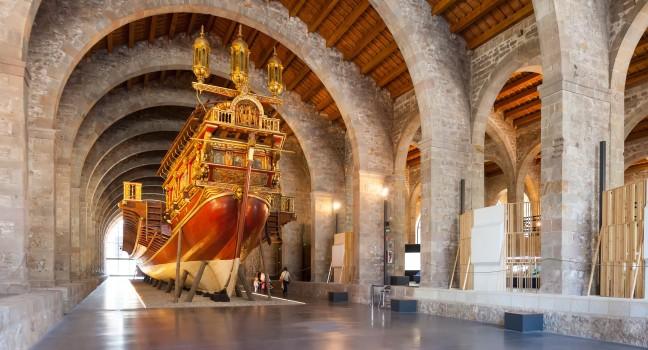
This superb museum is housed in the 13th-century Drassanes Reials (Royal Shipyards), at the foot of La Rambla adjacent to the harborfront. This vast covered complex launched the ships of Catalonia's powerful Mediterranean fleet directly from its yards into the port (the water once reached the level of the eastern facade of the building). Today, these are the world's largest and best-preserved medieval shipyards. Centuries ago, at a time when the region around Athens was a province of the House of Aragón (1311–90), they were of crucial importance to the sea power of Catalonia (then the heavyweight in an alliance with Aragón).

On the Avinguda del Paral·lel side of Drassanes is a completely intact section of the 14th- to 15th-century walls—Barcelona's third and final ramparts—that encircled El Raval along the Paral·lel and the Rondas de Sant Pau, Sant Antoni, and Universitat. (Ronda, the term used for the "rounds," or patrols soldiers made atop the defensive walls, became the name for the avenues that replaced them.)

The Museu Marítim is filled with vessels, including a spectacular collection of ship models. The life-size reconstruction of the galley of Juan de Austria, commander of the Spanish fleet in the Battle of Lepanto, is perhaps the most impressive display in the museum. Figureheads, nautical gear, early navigational charts, and medieval nautical lore enhance the experience, and headphones and infrared pointers provide a first-rate self-guided tour.

Concerts are occasionally held in this acoustic gem. The cafeteria-restaurant Norai, open daily 9 am to 8 pm, offers dining in a setting of medieval elegance, and has a charming terrace. Admission to the museum includes a visit to the schooner Santa Eulàlia, a meticulously restored clipper built in 1918, which is moored nearby at the Port Vell.

Av. de les Drassanes s/n, Barcelona, 08001, Spain
93-342–9920
Sight Details
€10 (includes admission to Santa Eulàlia clipper); free Sun. after 3 pm
Santa Eulàlia closed Mon.

Something incorrect in this review?

Museu Nacional d'Art de Catalunya

Montjuïc Fodor's choice
Museu Nacional dArt de Catalunya, Barcelona, Spain
© Ross Brinkerhoff / Fodor’s Travel

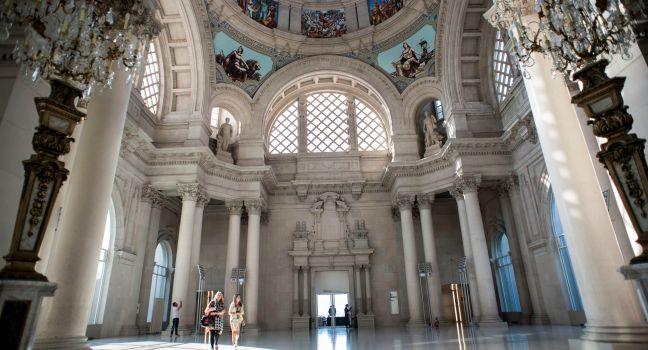
Housed in the imposingly domed, towered, frescoed, and columned Palau Nacional, built in 1929 as the centerpiece of the International Exposition, this superb museum was renovated between 1985 and 1992 by Gae Aulenti, architect of the Musée d'Orsay in Paris. In 2004, the museum's four holdings (Romanesque, Gothic, the photography collection, and the Cambó Bequest—a 50-strong trove of paintings by European Masters, including two by Goya, donated by Francesc Cambó) were joined by the 19th- and 20th-century collection of Catalan Impressionist and Moderniste painters. With this influx of artistic treasure, the Museu Nacional has become Catalonia's grand central museum.

Pride of place goes to the Romanesque exhibition, the world's finest collection of Romanesque frescoes, altarpieces, and wood carvings, most rescued from chapels in the Pyrenees during the 1920s to save them from deterioration, theft, and art dealers. Many, such as the famous Cristo de Taüll fresco (from the church of Sant Climent de Taüll in Taüll), have been painstakingly removed from crumbling walls of abandoned sites and remounted on ingenious frames that exactly reproduce the contours of their original settings. The exhibition leads out into the stunning central Oval Hall, with an enormous pillared cupola and elevator access to the panoramic roof terrace (though, a word to the hungry: skip the hall's disappointing café for the smarter Òleum Restaurant on the first floor).

Palau Nacional, Barcelona, 08038, Spain
93-622–0360
Sight Details
€12 (valid for day of purchase and 1 other day in same month); free Sat. after 3 pm and 1st Sun. of month
Closed Mon.

Something incorrect in this review?

Museu Picasso

Born-Ribera Fodor's choice
Gallery, Museu Picasso, Barcelona, Spain
© Ross Brinkerhoff / Fodor’s Travel

The Picasso Museum is housed in five adjoining 13th- to 15th-century palaces on Carrer Montcada, a street known for its elegant medieval mansions. Picasso spent his formative years in Barcelona (1895–1904), and although this collection doesn't include a significant number of his most famous paintings, it's strong on his early work, especially showcasing the link between Picasso and Barcelona.

The museum opened in 1963 on the suggestion of Picasso's friend Jaume Sabartés, and the initial donation was from the Sabartés collection. Later, Picasso donated his early works, and in 1982 his widow, Jacqueline Roque, added 41 ceramic pieces. Displays include childhood sketches, works from the artist's Rose and Blue periods, and the famous 1950s cubist variations on Velázquez's Las Meninas (in Rooms 12–16).

On the lower-floor, the sketches, oils, and schoolboy caricatures from Picasso's early years in A Coruña are perhaps the most fascinating part of the whole museum, showing the facility he seemed to possess from birth. His La Primera Communión (First Communion), painted at the age of 15, gives an idea of his early accomplishments. On the second floor you see the beginnings of the mature Picasso and his Blue Period in Paris. Stop at the terrace café and restaurant for a light Mediterranean meal to break up the day.

It is always best to book tickets online ahead of time, especially for visits on the first Sunday of the month and every Thursday after 4 pm, when admission is free.

Montcada 15–19, Barcelona, 08003, Spain
93-256–3000
Sight Details
€15; free Thurs. from 4 pm, and 1st Sun. of month, and with Barcelona Card. Tours from €12
Closed Mon.

Something incorrect in this review?

Palau de la Música Catalana

Born-Ribera Fodor's choice
The Palau de la Musica Catalana  is a concert hall in Barcelona, built between 1905 and 1908 by the architect Lluis Domenech i Montaner,  on June 1, 2012. Barcelona.
Vlad G / Shutterstock

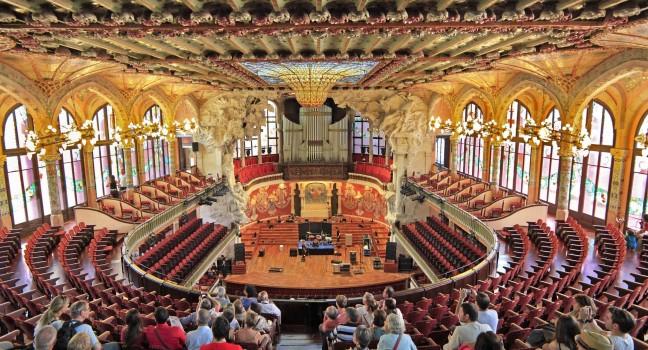
On Carrer Amadeus Vives, just off Via Laietana, a 10-minute walk from Plaça de Catalunya, is one of the world's most extraordinary music halls, a flamboyant tour de force designed in 1908 by Lluís Domènech i Montaner. Its sponsors, the Orfeó Català musical society, wanted it to celebrate the importance of music in Catalan culture and the life of its ordinary people (as opposed to the Liceu opera house, with its Castilian-speaking, monarchist, upper-class patrons, and its music from elsewhere), but the Palau turned out to be anything but commonplace. It and the Liceu were, for many decades, opposing crosstown forces in Barcelona's musical as well as philosophical discourse. If you can't fit a performance into your itinerary, you owe it to yourself to at least take a tour of this amazing building.

The exterior is a remarkable riot of color and form. The Miquel Blay sculptural group over the corner of Amadeu Vives and Sant Pere Més Alt is a hymn in stone to Catalonia's popular traditions, with hardly a note left unsung: St. George the dragon-slayer (at the top), women and children at play and work, fishermen with oars over their shoulders—a panoply of everyday life.

Inside, the decor of the Palau assaults your senses before the first note of music is ever played. Wagner's Valkyries burst from the right side of the stage over a heavy-browed bust of Beethoven; Catalonia's popular music is represented by the graceful maidens of Lluís Millet's song Flors de Maig (Flowers of May) on the left. Overhead, an inverted stained-glass cupola seems to channel the divine gift of music straight from heaven. Painted rosettes and giant peacock feathers adorn the walls and columns, and, across the entire back wall of the stage, is a relief of muse-like Art Nouveau musicians in costume. The visuals alone make music sound different here, be it a chamber orchestra, a renowned piano soloist, a gospel choir, or an Afro-Cuban combo.

A variety of tours are available. The standard guided tour in English takes place hourly from 9 to 3 and costs €22. Self-guided audio tours, downloaded to your personal device, are €18.

Park Güell

Gràcia Fodor's choice
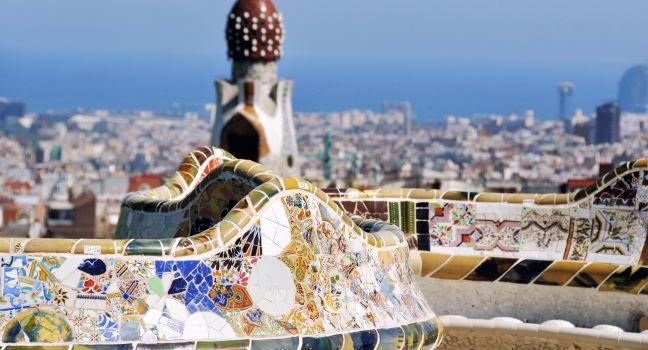
Bench in the Park Guell on July 11, 2011 in Barcelona, Spain. Famous park designed by Antoni Gaudi with a view at the city and sea. UNESCO World Heritage Site.
Madrugada Verde/Shutterstock

Built between 1900 and 1914, this park is one of Gaudí's, and Barcelona's, most visited attractions. Named for and commissioned by Gaudí's steadfast patron, Count Eusebi Güell, it was originally intended as a gated residential community based on the English Garden City model. The centerpiece of the project was a public square, with a pillared marketplace beneath it. Only two of the houses were ever built, one of which was designed by Gaudí's assistant Francesc Berenguer and became Gaudí's home from 1906 to 1925. It now houses the Casa-Museu Gaudí museum of memorabilia (currently closed for renovation).

Ultimately, the Güell family turned the area over to the city as a public park for local residents, and it remains so today. Tickets are required to access all of Park Güell, including the "monumental area," where the main attractions are located. It's advisable to purchase timed tickets online, available up to three months in advance, rather than at the park.

An Art Nouveau extravaganza with gingerbread gatehouses, Park Güell is a perfect place to visit on a sunny morning before the temperature heats up. The gatehouse on the right, topped with a rendition in ceramic tile of the hallucinogenic red-and-white fly amanita mushroom (rumored to have been a Gaudí favorite), is now part of the Barcelona History Museum. The exhibition inside has plans, scale models, photos, and suggested routes analyzing the park in detail. Atop the gatehouse on the left sits the phallus impudicus (no translation necessary).

Other Gaudí highlights include the Room of a Hundred Columns—a covered market supported by tilted Doric-style columns and mosaic medallions—the double set of stairs, and the iconic lizard guarding the fountain between them. There's also the fabulous serpentine, polychrome bench enclosing the square. The bench is one of Gaudí assistant Josep Maria Jujol's most memorable creations, and one of Barcelona's best examples of the trencadís technique (mosaics of broken tile fragments: recycling as high art).

From the Lesseps metro station, take bus No. 24 or 116 to the park entrance. From the Bus Turístic stop on Travessera de Dalt, make the steep 10-minute climb up Carrer de Lallard or Avinguda del Santuari de Sant Josep de la Muntanya.

Real Monestir de Santa Maria de Pedralbes

Pedralbes Fodor's choice
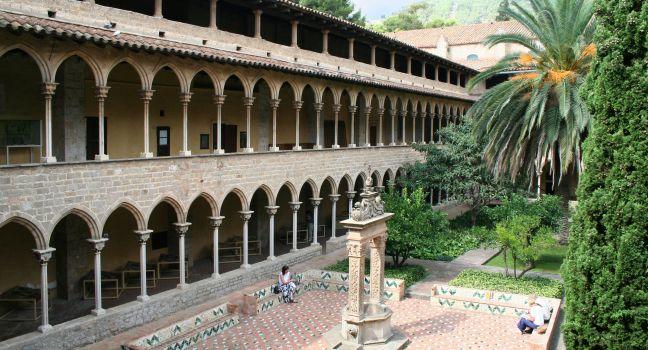
Courtyard, Monestir de Pedralbes, Barcelona, Spain
Solodovnikova Elena / Shutterstock

This marvel of a monastery, named for its original white stones (pedres albes, from the Latin petras albas), is really a convent, founded in 1326 for the Franciscan order of Poor Clares by Reina (Queen) Elisenda. The three-story Gothic cloister, one of the finest in Europe, surrounds a lush garden. The day cells, where the nuns spent their mornings praying, sewing, and studying, circle the arcaded courtyard.

The Capella de Sant Miquel, just to the right of the entrance, has murals painted in 1346 by Catalan master Ferrer Bassa. Look for the letters spelling out "No m’oblidi/ digui-li a Joan/ a quatre de setembre de 1415” ("Do not forget me / tell John / September 4, 1415") scratched between the figures of St. Francis and St. Clare (with book and quill). While the true meaning of the message is unknown, one theory is that it was written by a brokenhearted novice.

The nuns' upstairs dormitory contains the convent's treasures: paintings, liturgical objects, and seven centuries of artistic and cultural patrimony. Temporary exhibits are displayed in this space. The refectory, where the Poor Clares dined in silence, has a pulpit used for readings, while wall inscriptions exhort Silentium ("Silence"), Audi tacens ("Listen carefully"), and Considera morientem ("Consider, we are dying"). Notice the fading mural in the corner, and the broken paving tiles—according to unsubstantiated legend, the result of the heavy cannon positioned here during the 1809 Napoleonic occupation.

The monastery is now a museum, housing permanent exhibitions on its own art and legacy as well as third-party special exhibitions from time to time. There are occasional open-air concerts in the cloister, especially of Medieval music; check local event listings and book a seat if you can.

Baixada del Monestir 9, Barcelona, 08034, Spain
93-256–3434
Sight Details
€5; free for visitors under 16, and with the Barcelona Card; free Sun. after 3 pm, and 1st Sun. of every month
Closed Mon.

Something incorrect in this review?

Recinte Modernista de Sant Pau

Eixample Dreta Fodor's choice
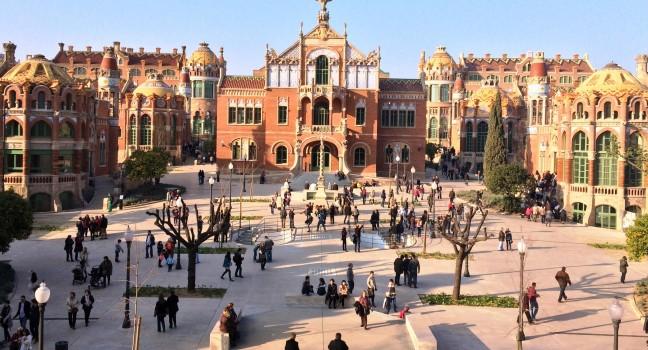
Recinte Modernista de l'Hospital de Sant Pau
Recinte Modernista de l'Hospital de Sant Pau (18) by Daniel García Peris

Set in what was one of the most beautiful public projects in the world—the Hospital de la Santa Creu i Sant Pau—the Recinte Modernista (Art Nouveau Site) is sadly no longer a hospital, but it is a UNESCO World Heritage Site that is extraordinary in its setting and style. The story behind it as fascinating as the site itself: architect Lluis Domènech i Montaner believed that trees, flowers, and fresh air were likely to help people recover from what ailed them more than anything doctors could do in emotionally sterile surroundings. The hospital wards were set among gardens, their brick facades topped with polychrome ceramic tile roofs in extravagant shapes and details. Domènech also believed in the therapeutic properties of form and color, and decorated the hospital with Eusebi Arnau and Pau Gargallo sculptures and colorful mosaics, replete with motifs of hope and healing and healthy growth. One of the most famous, by Mario Maragliano, describes the history of the institution and can be found in the main facade of the building. Begun in 1902, this monumental production won Domènech i Montaner his third Barcelona "Best Building" award in 1912. (His previous two prizes were for the Palau de la Música Catalana and Casa Lleó Morera.)

Since it no longer operates as a hospital (the new Sant Pau—comparatively soulless but fully functional and state-of-the-art—is uphill from the complex), many of the buildings have been taken over for other purposes. The Sant Manuel Pavilion, for example, now houses the Barcelona Health Hub, a platform for startups working in the fields of e-health and innovation. The center offers self-guided tours with interactive audio guides.

Santa Maria del Mar

Born-Ribera Fodor's choice
Ceiling, Santa Maria del Mar, Barcelona, Spain
© Halie Cousineau/ Fodor’s Travel

An example of early Catalan Gothic architecture, Santa Maria del Mar is extraordinary for its unbroken lines and elegance. It was built in just 55 years, from 1329 to 1384, at what was then the water's edge. The church was built by stonemasons who chose, fitted, and carved each stone hauled down from the same Montjuïc quarry that provided the sandstone for the 4th-century Roman walls. The medieval numerological symbol for the Virgin Mary, the number eight (or multiples thereof), runs through every element: the 16 octagonal pillars are 2 meters in diameter and spread out into rib vaulting arches at a height of 16 meters; the painted keystones at the apex of the arches are 32 meters from the floor; and the central nave is twice as wide as the lateral naves (8 meters each).

The church survived the fury of anarchists who, in 1936, burned nearly all of Barcelona's churches as a reprisal against the alliance of army, church, and oligarchy during the military rebellion. The basilica, then filled with ornate side chapels and choir stalls, burned for 11 days, nearly crumbling. Restored after the Civil War by a series of Bauhaus-trained architects, the church is now an architectural gem.

The paintings in the keystones overhead represent the Coronation of the Virgin, the Nativity, the Annunciation, the equestrian figure of the father of Pedro IV, King Alfons, and the Barcelona coat of arms. The 34 lateral chapels are dedicated to different saints and images. The first chapel to the left of the altar (No. 20) is the Capella del Santo Cristo (Chapel of the Holy Christ), its stained-glass window an allegory of Barcelona's 1992 Olympic Games. An engraved stone riser beside the door onto Carrer Sombrerers commemorates where San Ignacio de Loyola, founder of the Jesuit Order, begged for alms in 1524 and 1525.

Set aside at least a half-hour to see Santa Maria del Mar, and be sure to check out La Catedral del Mar (The Cathedral of the Sea), by Ildefonso Falcons, which chronicles the construction of the basilica and 14th-century life in Barcelona. Consider joining a guided tour to climb the towers for magnificent 360-degree rooftop views of what remains of medieval urban Barcelona, or to access the crypt.

Scan weekly magazines to see if there are any concerts being held in the basilica during your visit. The setting and the acoustics make performances here truly memorable.

Temple Expiatori de la Sagrada Família

Eixample Dreta Fodor's choice
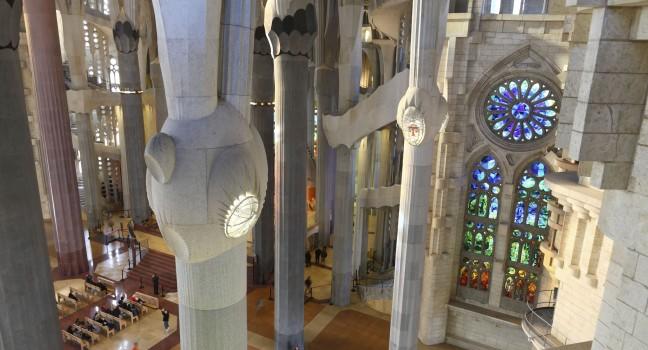
Architecture detail of windows, ceiling and pillars in La Sagrada Familia, Barcelona by Gaudi
(c) Achimhb | Dreamstime.com

Barcelona's most emblematic architectural icon, Antoni Gaudí's Sagrada Família, is still under construction more than 140 years after it was begun. This striking and surreal creation was conceived as nothing short of a Bible in stone, a gigantic representation of the entire history of Christianity, and it continues to cause responses from surprise to consternation to wonder. Plan to spend at least a few hours here to take it all in. However long your visit, it's a good idea to bring binoculars.

Looming over Barcelona like a magical mid-city massif of needles and peaks, the Sagrada Família can at first seem like piles of caves and grottoes heaped on a labyrinth of stalactites, stalagmites, and flora and fauna of every stripe and sort. The sheer immensity of the site and the energy flowing from it are staggering. The scale alone is daunting: the current lateral facades will one day be dwarfed by the main Glory facade and central spire—the Torre de Jesús (Tower of Jesus Christ), the only one of the 18 towers yet to be completed, which will be crowned by an illuminated polychrome ceramic cross and soar to a final height 1 yard shorter than Montjuïc (564 feet) guarding the entrance to the port (Gaudí felt it improper for the work of man to surpass that of God). You can take an elevator skyward to the top of the bell towers for some spectacular views (choose the "Sagrada Família and Towers" ticket). Back on the ground, visit the museum, which displays Gaudí's scale models, photographs showing the progress of construction, and images of the vast outpouring at Gaudí's funeral; the architect is buried under the basilica, to the left of the altar in the crypt.

Soaring skyward in intricately detailed and twisted carvings and sculptures, part of the Nativity facade is made of stone from Montserrat, Barcelona's cherished mountain sanctuary and home of Catalonia's patron saint, La Moreneta, the Black Virgin of Montserrat. Gaudí himself was fond of comparing the Sagrada Família to the shapes of the sawtooth massif 50 km (30 miles) west of the city; a plaque in one of Montserrat's caverns reads "Lloc d'inspiració de Gaudí" ("Place of inspiration for Gaudí").

"My client is not in a hurry," Gaudí was fond of replying to anyone curious about the timetable for the completion of his mammoth project. The Sagrada Família was begun in 1882 under architect Francisco de Paula del Villar, passed on in 1883 to Gaudí (who worked on the project until his death in 1926). After the church's neo-Gothic beginnings, Gaudí added Art Nouveau touches to the crypt (the floral capitals) and in 1891 went on to begin the Nativity facade of a new and vastly ambitious project. At the time of his death in 1926, however, only one tower of the Nativity facade had been completed.

Gaudí's plans called for three immense facades, the Nativity and Passion facades on the northeast and southwest sides of the church, and the even larger Glory facade designed as the building's main entry, facing east over Carrer de Mallorca. The four bell towers over each facade together represent the 12 apostles. The first bell tower, in honor of Barnabas and the only one Gaudí lived to see, was completed in 1925. The towers of Barnabas, Simon, Judas, and Matthias (from left to right) stand over the Nativity facade, with James, Bartholomew, Thomas, and Phillip over the Passion facade. The four larger towers around the central Tower of the Savior will represent the evangelists Mark, Matthew, John, and Luke. Between the central tower and the reredos at the northwestern end of the nave rises the 18th and second-highest tower, crowned with a star, in honor of the Virgin Mary. The naves are not supported by buttresses but by treelike helicoidal (spiraling) columns.

Reading the existing facades is a challenging course in Bible studies. The three doors on the Nativity facade are named for Charity in the center, Faith on the right, and Hope on the left. (Gaudí often described the symbolism of his work to visitors, but because he never wrote any of it down much of the interpretation owes to oral tradition.) In the Nativity facade Gaudí addresses nothing less than the fundamental mystery of Christianity: why does God the Creator become, through Jesus Christ, a mortal creature? The answer, as Gaudí explained it in stone, is that God did this to free man from the slavery of selfishness, symbolized by the iron fence around the serpent of evil at the base of the central column of the Portal of Charity. The column is covered with the genealogy of Christ going back to Abraham. Above the central column is a portrayal of the birth of Christ; above that, the Annunciation is flanked by a grotto-like arch of water. Overhead are the constellations in the Christmas sky at Bethlehem.

To the right, the Portal of Faith chronicles scenes of Christ's youth: Jesus preaching at the age of 13, and Zacharias prophetically writing the name of John. Higher up are grapes and wheat, symbols of the Eucharist, and a sculpture of a hand and an eye, symbols of divine providence.

The left-hand Portal of Hope begins at the bottom with flora and fauna from the Nile; the slaughter of the innocents; the flight of the Holy Family into Egypt; Joseph surrounded by his carpenter's tools, contemplating his son; and the marriage of Joseph and Mary. Above this is a sculpted boat with an anchor, representing the Church, piloted by St. Joseph assisted by the Holy Spirit in the form of a dove.

Gaudí planned these slender towers to house a system of tubular bells (still to be created and installed) capable of playing more complete and complex music than standard bell-ringing changes had previously been able to perform. At a height of one-third of the bell tower are the seated figures of the apostles.

The Passion facade on the Sagrada Família's southwestern side, over Carrer Sardenya and the Plaça de la Sagrada Família, is a dramatic contrast to the Nativity facade. In 1986, sculptor Josep Maria Subirachs was chosen by project director Jordi Bonet to finish the Passion facade. Subirachs was picked for his starkly realistic, almost geometrical sculptural style, which many visitors and devotees of Gaudí find gratingly off the mark. Subirachs pays double homage to the great Moderniste master in the Passion facade: Gaudí himself appears over the left side of the main entry, making notes or drawings, while the Roman soldiers farther out and above are modeled on Gaudí's helmeted warriors from the roof of La Pedrera. Art critic Robert Hughes calls the homage "sincere in the way that only the worst art can be: which is to say, utterly so."

Following an S-shape path across the Passion facade, the scenes represented begin at the lower left with the Last Supper. The faces of the disciples are contorted in confusion and dismay, especially that of Judas, clutching his bag of money behind his back. The next sculptural group to the right represents the prayer in the Garden of Gethsemane and Peter awakening, followed by the kiss of Judas.

In the center, Jesus is lashed to a pillar during his flagellation. Note the column's top stone is out of kilter, reminder of the stone soon to be removed from Christ's sepulcher. To the right of the door is a rooster, as well as Peter, who is lamenting his third denial of Christ: "ere the cock crows." Farther to the right are Pilate and Jesus with the crown of thorns, while just above, starting back to the left, Simon of Cyrene helps Jesus with the cross after his first fall.

Over the center is the representation of Jesus consoling the women of Jerusalem and a faceless St. Veronica (because her story is considered legendary, not historical fact), with the veil she gave Christ to wipe his face with on the way to Calvary. To the left is the likeness of Gaudí taking notes, and farther to the left is the equestrian figure of a centurion piercing the side of the church with his spear, the church representing the body of Christ. Above are the soldiers rolling dice for Christ's clothing and the naked, crucified Christ at the center. To the right are Peter and Mary at the sepulcher. At Christ's feet is a figure with a furrowed brow, thought to be a self-portrait of Subirachs, characterized by the sculptor's giant hand and an "S" on his right arm.

Over the door will be the church's 16 prophets and patriarchs under the cross of salvation. Apostles James, Bartholomew, Thomas, and Phillip appear at a height of 148 feet on their respective bell towers. Thomas, the apostle who demanded proof of Christ's resurrection (hence the expression "doubting Thomas"), is visible pointing to the palm of his hand, asking to inspect Christ's wounds. Bartholomew, on the left, is turning his face upward toward the culminating element in the Passion facade, the 26-foot-tall gold metallic representation of the resurrected Christ on a bridge between the four bell towers at a height of 198 feet.

The apse of the basilica, consecrated by Pope Benedict XVI in November 2010, has space for close to 15,000 people and a choir loft for 1,500. The most recent towers to be completed are those dedicated to the four evangelists—Matthew, Mark, Luke, and John—while the highest of all, dedicated to Christ the Savior, still remains. In 2021, the Tower of the Virgin Mary was inaugurated, topped with a 5.5-ton star made of textured glass and stainless steel. Once finished, the great central tower and dome, resting on four immense columns of Iranian porphyry, considered the hardest of all stones, will soar to a height of 564 feet, making the Sagrada Família Barcelona's tallest building. Prior to the outbreak of the COVID-19 pandemic, the Sagrada Familia was due to be completed by 2026, the 100th anniversary of Gaudí's death, after 144 years of construction. A new official date is yet to be announced. 

CaixaForum Barcelona

Montjuïc Fodor's choice

The 1911 Casaramona textile factory, a neo-Mudejar Art Nouveau masterpiece by Josep Puig i Cadafalch (architect of Casa de les Punxes, Casa Amatller, and Palau del Baró de Quadras), is now a center for temporary art exhibits, as well as concerts, live performances, and other cultural events. The original brickwork is spectacular, while a 2002 restoration added sleek white modern entryway designed by Japanese architect Arata Isozaki, also responsible for the nearby Palau Sant Jordi.

Casa Vicens

Gràcia Fodor's choice

Antoni Gaudí's first important commission as a young architect was built between 1883 and 1885, and it stands out for its colorful facade that combines green-and-white checkered tiles alongside floral designs. The client, Manel Vicens i Montaner, a stock and currency broker, entrusted the young architect with designing his summer residence in the former village of Gràcia. The home is a triumph of early Catalan Modernisme, borrowing freely from architectural styles around the world including Moderniste (with its sinuous nature-inspired motifs) and Orientalist and Mudejar (Moorish-inspired) elements, evident in the ornate tile work. 

In 1925, Antonio Jover i Puig, a prominent local doctor, purchased the house and greatly altered the interiors; in 2014, it was sold to the Andorra-based MoraBanc, which established a foundation to preserve this remarkable historic property, and opened it to the public in 2017. Recent renovations have restored much of Gaudí’s original design. The marvelous interiors feature trompe-l'oeil birds painted on the walls and intricately carved ceilings; the phantasmic Orientalist papier-mâché tiles and cupola in the smoking alcove on the main floor is enough to make you wonder what folks back then were putting in their pipes. In any case, it is a must-visit.

Catedral de Barcelona

Barri Gòtic Fodor's choice

Barcelona's cathedral is a repository of centuries of the city's history and legend—although as a work of architecture visitors might find it a bit of a disappointment, compared to the Mediterranean Gothic Santa Maria del Mar and Gaudí's Moderniste Sagrada Família. It was built between 1298 and 1450; work on the spire and neo-Gothic facade began in 1892 and was not completed until 1913. Historians are not sure about the identity of the architect: one name often proposed is Jaume Fabre, a native of Mallorca. The building is perhaps most impressive at night, floodlit with the stained-glass windows illuminated from inside; book a room with a balcony at the Hotel Colon, facing the cathedral square, and make the most of it.

This is reputedly the darkest of all the world's great cathedrals—even at high noon the nave is enveloped in shadows, which give the appearance that it's larger than it actually is—so it takes a while for your eyes to adjust to the rich, velvety pitch of the interior. Don't miss the beautifully carved choir stalls of the Knights of the Golden Fleece; the intricately and elaborately sculpted organ loft over the door out to Plaça Sant Iu (with its celebrated Saracen's Head sculpture); the series of 60-odd wood sculptures of evangelical figures along the exterior lateral walls of the choir; the cloister with its fountain and geese in the pond; and, in the crypt, the tomb of Santa Eulàlia.

St. Eulàlia, originally interred at Santa Maria del Mar—then known as Santa Maria de les Arenes (St. Mary of the Sands)—was moved to the cathedral in 1339, and venerated here as its patron and protector. Eulalistas (St. Eulàlia devotees, rivals of a sort to the followers of La Mercé, or Our Lady of Mercy) celebrate the fiesta of La Laia (the nickname for Eulàlia) for a few days around her feast day on February 12.

Enter from the front portal (there are also entrances through the cloister and from Carrer Comtes down the left side of the apse), and the first thing you see are the high-relief sculptures of the story of St. Eulàlia, on the near side of the choir stalls. The first scene, on the left, shows St. Eulàlia in front of Roman Consul Decius with her left hand on her heart and her outstretched right hand pointing at a cross in the distance. In the next, she is tied to a column and being whipped by the consul's thugs. To the right of the door into the choir the unconscious Eulàlia is being hauled away, and in the final scene on the right she is being lashed to the X-shape cross upon which she was crucified in mid-February in the year 303. To the right of this high relief is a sculpture of the martyred heroine, resurrected as a living saint.

Among the two dozen ornate and gilded chapels in the basilica, pay due attention to the Capella de Lepant, dedicated to Sant Crist de Lepanto, in the far right corner as you enter through the front door. According to legend, the 15th-century polychrome wood sculpture of a battle-scarred, dark-skinned Christ, visible on the altar of this 100-seat chapel behind a black-clad Mare de Deu dels Dolors (Our Lady of the Sorrows), was the bowsprit of the flagship Spanish galley at the battle fought between Christian and Ottoman fleets on October 7, 1571.

Outside the main nave of the cathedral to the right, you'll find the leafy, palm tree–shaded cloister surrounding a tropical garden and a pool said to be populated by 13 snow-white geese, one for each of the tortures inflicted upon St. Eulàlia in an effort to break her faith. Legend has it that they are descendants of the flock of geese from Rome's Capitoline Hill, whose honking alarms roused the city to repel invaders during the days of the Roman Republic. Don't miss the fountain with the bronze sculpture of an equestrian St. George, hacking away at his perennial foe, the dragon, on the eastern corner of the cloister. On the day of Corpus Christi, this fountain is one of the more spectacular displays of the traditional l'ou com balla (dancing egg).

In front of the cathedral is the grand square of Plaça de la Seu, where on occasion, barcelonins gather to dance the sardana, the circular folk dance performed for centuries as a symbol-in-motion of Catalan identity and the solidarity of the Catalan people. Nimble-footed oldsters share the space with young esbarts (dance troupes), coats and bags piled in the center of the ring, all dancing together to the reedy music of the cobla (band) in smooth, deceptively simple, heel-and-toe sequences of steps. This is no tourist attraction: Catalans dance the sardana just for themselves. Check local listings for the annual series of evening organ concerts held in the cathedral.

Pl. de la Seu s/n, Barcelona, 08002, Spain
93-342–8260
Sight Details
Free for worshippers; cultural/tourist visits €14 (includes cathedral, cloister, roof, choir, Chapter Hall, and Diocesan Museum)

Something incorrect in this review?

Ciutadella Park

La Ciutadella Fodor's choice

Once a fortress designed to consolidate Madrid's military occupation of Barcelona, the Ciutadella is now the city's main downtown park. The clearing dates from shortly after the War of the Spanish Succession in the early 18th century, when Felipe V demolished almost 1,300 houses in what was then the Barri de la Ribera to build a fortress and barracks for his soldiers and a glacis (open space) between rebellious Barcelona and his artillery positions. The fortress walls were pulled down in 1869 and replaced by gardens laid out by Josep Fontserè. In 1888, the park was the site of the Universal Exposition that put Barcelona on the map as a truly European city; today it is home to the Castell dels Tres Dragons, built by architect Lluís Domènech i Montaner as the restaurant for the exposition (the only building to survive that project, now a botanical research center, not open to the public), the Catalan parliament, the city zoo, and two subtropical plant houses.  Be very careful with your belongings, particularly mobile phones, inside the park; keep all bags on your person. 

Gran Teatre del Liceu

La Rambla Fodor's choice

Barcelona's opera house has long been considered one of the most beautiful in Europe, a rival to La Scala in Milan. First built in 1848, this cherished cultural landmark was torched in 1861, later bombed by anarchists in 1893, and once again gutted by an accidental fire in early 1994. During that most recent fire, Barcelona's soprano Montserrat Caballé stood on La Rambla in tears as her beloved venue was consumed. Five years later, a restored Liceu, equipped for modern productions, opened anew. Some of the Liceu's most spectacular halls and rooms, including the glittering foyer known as the Saló dels Miralls (Room of Mirrors), were untouched by the fire of 1994, as were those of Spain's oldest social club, El Círculo del Liceu—established in 1847 and restored to its pristine original condition after the fire.

IDEAL Centre d’Arts Digitals

Poblenou Fodor's choice

A defunct Poblenou movie theater rescued and reimagined for the digital age, the IDEAL space combines 360-degree projections with virtual reality and cutting-edge light and sound effects for an immersive experience. Recent shows have brought to life the story of Tutankhamun and the works of Monet, Gustav Klimt, and Frida Kahlo.

Dr. Trueta 196–198, Barcelona, 08005, Spain
93-395–7412
Sight Details
From €14.50
Closed Tues. and Thurs. morning (the latter for school visits)

Something incorrect in this review?

L’Hivernacle

La Ciutadella Fodor's choice

Catalan for “greenhouse,” this striking, plant-filled iron structure was originally built by Josep Amargós i Samaranch as a reception and lecture hall for the 1888 Universal Exposition. Despite being one of the outstanding moderniste buildings of Ciutadella Park, it bumbled along as a restaurant before falling into disuse in 2006, then inevitable disrepair. In December 2023, following months of restorative TLC, it opened to the public once again; becoming the first completed project in a vision to turn Ciutadella Park and its surroundings into a science and heritage hub.

Mirador Torre Glòries

Poblenou Fodor's choice

While most of the 34 levels in the shiny, gherkin-shape tower that pierces Barcelona’s skyline are out of reach (the Jean Nouvel--designed building is now a business center), the exception is a 30th-floor observation deck. You’ll find the expected panoramic views—and they do delight, especially during the pink hues of dusk. What you won’t expect is a multiplatform, suspended art installation that you can scramble up to feel eerily airborne: nerves and agility, withstanding. Called Cloud Cities, it’s a truly unique experience, as is the basement exhibition of real-time big data on the city, from air quality to how many planes are overhead.

Av. Diagonal 209, Barcelona, 08018, Spain
93-547--8982
Sight Details
€15. To climb Cloud Cities, €25 (over-10s only, strict clothing and admission rules apply, it's essential to check ahead)
Buy online; tickets cost an extra €3 on-site

Something incorrect in this review?

Moco Museum Barcelona

Fodor's choice

A stone’s throw from the Museu Picasso, this privately owned museum displays works by contemporary and modern masters—along with edgy street art—in a beautiful, centuries-old former palace. Small but mighty, the collection includes pieces by Andy Warhol, Keith Haring, Damien Hirst, and Banksy, plus a towering site-specific statue by graffiti artist KAWS in the entry courtyard.

Montcada, 25, 08003, Spain
93-629–1858
Sight Details
€17.95 (save by booking online or with Barcelona Card)

Something incorrect in this review?

Museu del Disseny de Barcelona

La Ciutadella Fodor's choice

This eye-catching center for design is home to six permanent collections covering textiles, historical clothing and haute couture, ceramics (with pieces by Miró and Picasso), decorative arts, and graphic design. The product design and modern and contemporary furniture collections are particularly outstanding. Temporary exhibits run the gamut, with recent shows devoted to the graffiti art of Banksy, Balenciaga's exquisite hats, and women in design. The building itself, by MBM Arquitectes (Oriol Bohigas, doyen of the firm, was the prime mover in much of Barcelona's makeover for the 1992 Olympics), juts out like a multistoried wedge into the Plaça de les Glòries.

Pl. de les Glòries Catalans 37–38, Barcelona, 08018, Spain
93-256–6700
Sight Details
€6; free Sun. 3–8 and all day 1st Sun. every month; temporary exhibit cost varies
Closed Mon.

Something incorrect in this review?

Palau Güell

La Rambla Fodor's choice

Gaudí built this mansion in 1886–90 for textile baron Count Eusebi de Güell Bacigalupi, his most important patron. (The prominent four bars of the senyera, the banner of Catalunya, on the facade between the parabolic arches of the entrance attest to the nationalist fervor the two men shared.) Gaudí's principal obsession in this project was to find a way to illuminate this seven-story house, hemmed in as it is by other buildings in the cramped quarters of El Raval. The dark facade is a dramatic foil for the brilliance of the inside, where spear-shape Art Nouveau columns frame the windows, rising to support a series of detailed and elaborately carved wood ceilings.

The basement stables are famous for the "fungiform" (mushroom-like) columns carrying the weight of the whole building. Note Gaudí's signature parabolic arches between the columns and the way the arches meet overhead, forming a canopy of palm fronds. (The beauty of the construction was probably little consolation to the political prisoners held here during the 1936–39 Civil War.) The patio where the horses were groomed receives light through a skylight, one of many devices Gaudí used to brighten the space. Don't miss the figures of the faithful hounds, with the rings in their mouths for hitching horses, or the wooden bricks laid down in lieu of cobblestones in the entryway upstairs and on the ramp down to the basement grooming area, to deaden the sound of horses' hooves.

Upstairs are three successive receiving rooms; the wooden ceilings are progressively more spectacular in the complexity of their richly molded floral motifs. The room farthest in has a jalousie in the balcony: a double grate through which Güell was able to observe—and eavesdrop on—his arriving guests. The main hall, with the three-story-tall tower reaching up above the roof, was for parties, dances, and receptions. Musicians played from the balcony; the overhead balcony window was for the principal singer. Double doors enclose a chapel of hammered copper with retractable prie-dieu; around the corner is a small organ, the flutes in rectangular tubes climbing the central shaft of the building.

The dining room is dominated by a beautiful mahogany banquet table seating 10, an Art Nouveau fireplace in the shape of a deeply curving horseshoe arch, and walls with floral and animal motifs. From the outside rear terrace, the polished Garraf marble of the main part of the house is exposed; the brick servants' quarters are on the left. The passageway built toward La Rambla was all that came of a plan to buy an intervening property and connect three houses into one grand structure, a scheme that never materialized.

Gaudí is most himself on the roof, where his playful, polychrome ceramic chimneys seem like preludes to later works like the Park Güell and La Pedrera. Look for the flying-bat weather vane over the main chimney, a reference to the Catalan king Jaume I, who brought the house of Aragón to its 13th-century imperial apogee in the Mediterranean. Jaume I's affinity for bats is said to have stemmed from his Mallorca campaign, when, according to one version, he was awakened by a fluttering rat penat (literally, "condemned mouse") in time to stave off a Moorish night attack.

Nou de la Rambla 3–5, Barcelona, 08001, Spain
93-472–5775
Sight Details
€12; free 1st Sun. of month for tickets purchased online
Closed Mon.
Guided tours (1 hr) in English Sat. at 10:30 am at no additional cost

Something incorrect in this review?

Plaça de la Virreina

Gràcia Fodor's choice

The much-damaged and oft-restored church of Sant Joan de Gràcia anchors this lovely square where the Palau de la Virreina once stood; it was the summer residence of the same virreina (wife, or in this case, widow of a viceroy) whose 18th-century palace, the Palau de la Virreina, stands on the Rambla. The story of La Virreina, a young noblewoman widowed at an early age by the death of the elderly viceroy of Peru, is symbolized in the bronze sculpture atop the fountain in the center of the square: it portrays Ruth of the Old Testament, represented carrying the sheaves of wheat she was gathering when she learned of the death of her husband, Boaz. Ruth is the Old Testament paradigm of wifely fidelity to her husband's clan, a parallel to La Virreina—who spent her life doing good deeds with her husband's fortune. The rectorial residence at the back of the church is the work of Gaudí's perennial assistant and right-hand man Francesc Berenguer.

Pl. de la Virreina, Barcelona, 08024, Spain

Something incorrect in this review?

Plaça del Rei

Barri Gòtic Fodor's choice

This little square is a compact nexus of history. Long held to be the scene of Columbus's triumphal return from his first voyage to the New World—the precise spot where Ferdinand and Isabella received him is purportedly on the stairs fanning out from the corner of the square (though evidence indicates that the Catholic Monarchs were at a summer residence in the Empordá)—the Palau Reial Major (admission included in the €7 entrance fee for the Museu d'Història de Barcelona; closed Monday) was the official royal residence in Barcelona. The main room is the Saló del Tinell, a magnificent banquet hall built in 1362. To the left is the Palau del Lloctinent (Lieutenant's Palace); towering overhead in the corner is the dark 15th-century Torre Mirador del Rei Martí (King Martin's Watchtower). The 14th-century Capella Real de Santa Àgueda (Royal Chapel of St. Agatha) is on the right side of the stairway, and behind and to the right as you face the stairs is the Palau Clariana-Padellàs, moved to this spot stone by stone from Carrer Mercaders in the early 20th century and now the entrance to the Museu d'Història de Barcelona.

Pl. del Rei s/n, Barcelona, 08002, Spain

Something incorrect in this review?

Plaça Reial

La Rambla Fodor's choice

Nobel Prize–winning novelist Gabriel García Márquez, architect and urban planner Oriol Bohigas, and Pasqual Maragall, former president of the Catalonian Generalitat, are among the many famous people said to have acquired apartments overlooking this elegant square, a chiaroscuro masterpiece in which neoclassical symmetry clashes with big-city street funk. Plaça Reial is bordered by stately ocher facades with balconies overlooking the wrought-iron Fountain of the Three Graces, and an array of lampposts designed by Gaudí in 1879. Cafés and restaurants line the square. Plaça Reial is most colorful on Sunday morning, when collectors gather to trade stamps and coins; after dark it's a center of downtown nightlife for the jazz-minded, the young, and the adventurous (it's best to be streetwise touring this area in the late hours).

Plaça Reial, Barcelona, 08002, Spain

Something incorrect in this review?