63 Best Sights in Oaxaca, Mexico

Background Illustration for Sights

We've compiled the best of the best in Oaxaca - browse our top choices for the top things to see or do during your stay.

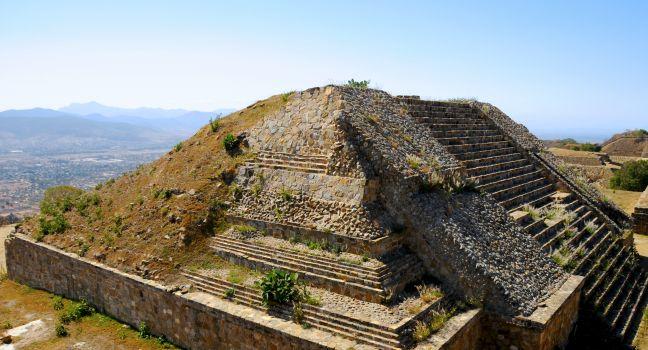
Monte Albán

Fodor's choice
The pyramid ruins of Monte Alban - Oaxaca, Mexico
Nfoto / Shutterstock

The massive temples of Monte Albán, perched atop a mesa, make this one of the country's most spectacular archaeological sites. This vast city was home to more than 30,000 Zapotec. Despite its size, experts estimate that only about 10% of the site has been uncovered. Digs are sporadic, taking place whenever the budget permits.

Monte Albán overlooks the Oaxaca Valley from a flattened mountaintop 5,085 feet high; the views are breathtaking. Either the Zapotec or their predecessors leveled the site around 600 BC. The varying heights of the site follow the contours of distant mountains. The oldest of the four temples is the Galería de los Danzantes, or the Dancers' Gallery, so named for the elaborately carved stone figures that once covered the building. Most of the originals are now in the site museum, but you can still see some in the temple. Experts are unsure whether the nude male figures represent captives, warriors, or some other group; the theory that they were dancers has been discarded because some appear to be bound.

The Zapotec constructed most of the buildings along a north–south axis, except for the so-called Observatorio (Observatory). The arrow-shape structure is set at a 45-degree angle, pointing toward the southwest. It's thought to have been an observatory, as it's more closely aligned with the stars than with the Earth's poles.

The Juego de Pelota, or ball game, was played in the well-excavated court. Hips, shoulders, knees, and elbows were probably used to hit a wooden or rubber ball. The details of these games are sketchy, but there's speculation that they were a means of solving disputes between factions or villages, of celebrating the defeat of a rival, or of worshipping the gods. Although human sacrifice is thought to have been connected with the ball game in certain parts of Mesoamerica, there's no evidence that it happened in Monte Albán.

No one knows for sure whether the Zapotec abandoned the site gradually or suddenly, but by AD 1000 it stood empty. Years afterward the Mixtec used Monte Albán as a lofty necropolis of lavish tombs. More than 200 tombs and 300 burial sites have been explored. The most fantastic of these, Tumba 7, yielded a treasure unequaled in North America. Inside were more than 500 priceless Mixtec objects, including gold breastplates; jade, pearl, ivory, and gold jewelry; and fans, masks, and belt buckles of precious stones and metals. The tomb is north of the parking lot but is seldom open.

At Monte Albán you'll find a small site museum with a gift shop. The cafeteria isn't half bad, and has a great view of the valley; sadly, it closes with the rest of the site at 5 pm.

Iglesia de Santo Domingo

Centro Historico Fodor's choice

With a 17th-century facade framed by two domed bell towers and an interior that's an energetic profusion of white and real gold leaf (typical of the Mexican baroque style), Santo Domingo is Oaxaca's most brilliantly decorated church. The interior of the dome is adorned with more than 100 medallions depicting various martyrs. Saturdays are usually wedding days. Pass by to see the wedding in process and the traditional dancing afterwards.

Look up at the ceiling just inside the front door to see a gilded rendering of the family tree of Santo Domingo. If you stop by as the sun sets in the afternoon, the light playing on the ceiling is the best show in town.

Macedonio Alcalá at Adolfo Gurrión, Oaxaca, 68000, Mexico
951-516–3720
Sight Details
Mon.–Sat. 7–1 and 4–7:30, Sun. 7–1 and 4–7

Something incorrect in this review?

Laguna de Manialtepec

Las Negras Fodor's choice

One of the most leisurely day trips from Puerto Escondido is a journey to this tranquil lagoon surrounded by mangroves and lush wetlands just 20 minutes from town. It's home to more than 300 species of migrant and resident birds such as pelicans, hawks, and roseate spoonbills. Although a half-day tour by motorboat, kayak, or canoe with Lalo Ecotours or Canadian naturalist Michael Malone of Hidden Voyages Ecotours (December–March) is the most convenient way to visit, you can also take public transportation and hire a local guide once you arrive. At certain times of the year, the lagoon glows with luminescent plankton and a night-boat tour offers the opportunity for the truly intrepid to jump in and swim amid the phosphorescence.

Puerto Escondido, Mexico

Something incorrect in this review?

Recommended Fodor's Video

Mitla

Fodor's choice

Mitla, 46 km (27 miles) southeast of Oaxaca, expanded and grew in influence as Monte Albán declined. Like its predecessor, Mitla is a complex started by the Zapotec and later taken over by the Mixtec. Unlike Monte Albán, Mitla's attraction lies not in its massive scale, but in its unusual ornamentation; the stonework depicts mesmerizing abstract designs with a powerful harmony. The striking architecture, which dates as late as the 1500s, is almost without equal within Mexico thanks to the exquisite greca workmanship on the fine local volcanic stone, which ranges in hue from pink to yellow.

The first structure you enter is the Grupo del Norte, where the Spanish settlers built Mitla's Catholic cathedral literally on top of the Zapotec structure, integrating the foundation. It's comparable to having the history of Oaxaca laid out before you in one building—truly remarkable. Mitla's name comes from the Nahuatl word mictlan, meaning "place of the dead." Don't expect to see anything resembling a graveyard, however; the Zapotec and Mixtec typically buried their dead under the entrance to the structure where the deceased resided.

There are a few underground tombs in the impressive Grupo de las Columnas (Group of the Columns), the main section of the ruins that are fun to climb down into. In that group is also the palace that forms the most striking architectural achievement of Mitla.

Museo de las Culturas

Centro Historico Fodor's choice

This gorgeous museum is laid out in a series of galleries around the cloister of the labyrinthine Ex-Convento de Santo Domingo. On the ground floor are temporary exhibits and a collection of antique books. On the second floor you'll find rooms dedicated to Oaxacan music, medicine, indigenous languages, and pottery. More than a dozen other salons have been organized chronologically.

Here you'll find such Monte Albán treasures as the stunning gold jewelry from Tomb 7.

Signage is in Spanish only, but English-language audio tours are available. Several lovely second-floor balconies have views of the botanical garden. The on-site shop has a wonderful collection of books, including coffee-table volumes on the art and architecture of Oaxaca. There are also plenty of maps and travel guides.

Macedonio Alcalá at Adolfo Gurrión, Oaxaca, 68000, Mexico
951-516–2991
Sight Details
MX$59
Tues.–Sun. 10–8, last entrance at 6:15

Something incorrect in this review?

Playa Carrizalillo

Carrizalillo Fodor's choice

In a region full of beautiful beaches, Playa Carrizalillo can still take your breath away. The high cliffs that surround it ensure that it's never too crowded. The aquamarine water is clean, clear, and shallow—perfect for swimming and snorkeling, especially around the rocks that frame the beautiful cove. Sometimes there are waves large enough to lure novice surfers. A handful of palm-thatched restaurants offer free use of loungers if you buy food and drinks. The beach is a MX$25 taxi ride from El Adoquin with access to the stairs through an orange archway on the Rinconada. From there it's 167 steps down to the water, but the steep stone staircase is well maintained and there's a handrail to help you along. Amenities: parking (no fee); toilets; food and drink; water sports. Best for: swimming; snorkeling; surfing.

Puerto Escondido, 71980, Mexico

Something incorrect in this review?

Playa Manzanillo

Fodor's choice

Of Puerto Escondido's seven beaches, Playa Manzanillo, which rings Puerto Angelito, is one of the safest for swimming. It's also one of the best for snorkeling, with a sandy ocean floor (watch for the occasional large rock), some coral formations, and calm, clear water. Locals are working towards Blue Flag eco-certification, so you'll see recycling bins, solar-powered lighting, and eco-toilets. Dogs must be leashed. You can reach this beach on foot (a 15-minute walk west of the Adoquín), by taxi (MX$25), or via a pathway from Playa Angelito. There's a long staircase down to the beach. The beach offers plenty of shade and is lined with casual beach restaurants (Palapa de Carrasco is a top choice) with lounge chairs. Amenities: food and drink; toilets; water sports. Best for: swimming; snorkeling.

5a Sur, Puerto Escondido, 71980, Mexico

Something incorrect in this review?

Playa San Agustinillo

Fodor's choice

This divine stretch of sand between Zipolite and Playa Mazunte is fringed by elegant coconut palms. It's somewhat safe for swimming, although the current can be strong. Keep to the western edge of the beach for the calmest waters. Early mornings you're likely to see people practicing yoga poses on the sand; there are several yoga schools nearby, including the world-renowned Hridaya Yoga Center and Solstice Yoga. Afternoons, as on neighboring beaches, vendors roam the sand selling ice cream, roasted peanuts, and serapes. Several excellent restaurants offer grilled fish, pizza, and welcome shade from the strong sun. Hang out for the day in a beach lounger; they're free with the purchase of food. Amenities: food and drink; water sports. Best for: swimming; walking; surfing.

San Agustinillo, 70900, Mexico

Something incorrect in this review?

Zona Arqueológica Bocana del Rio Copalita

Copalita Fodor's choice

The recently excavated Copalita archeological site is just 10 minutes from Huatulco's sleek hotel zone (a MX$70 taxi ride from La Crucecita's main plaza) but feels like a step back into another era. The well-designed site, a joint project by FONATUR and Mexico's National Institute of Anthropology and History, features the restored archaeological remains of the ancient city of Copalitan, occupied by the Zapotec and Mixtec peoples as far back as 500 BC. Plan to spend a few hours browsing the modern museum and its well-curated collection of ceremonial objects such as obsidian knives, jade jewelry, and funeral masks, and leave time for a stroll beneath a canopy of tropical trees to reach a spectacular cliff-side lookout across the Copalita River. Along the way, there are restored buildings from the Classic Period, including the Serpents Pyramid, a ball court, the Great Temple, and a pre-Hispanic lighthouse. Take insect repellent, a hat, water, and sturdy walking shoes.

Blvd. Copalita–Tangolunda tramo 15, Bahías de Huatulco, 70989, Mexico
No phone
Sight Details
MX$80
Tues.–Sun. 8–5

Something incorrect in this review?

Alameda de León

Centro Historico

This shady square, a bit smaller than the zócalo, is bordered by the massive cathedral on one side and the post office on the other. Locals gossip on wrought-iron benches or read the newspaper while their children chase pigeons and blow bubbles. Throughout the day, street artists perform alongside the cathedral.

Oaxaca, 68000, Mexico

Something incorrect in this review?

Alfarería Doña Rosa

Keep an eye out for the Alfarería Doña Rosa, a workshop named for the woman who invented the technique for giving the pottery its distinctive gloss. The revered craftswoman, famous for her photos with visiting celebrities, died in 1980, but her descendants continue making pottery the old-fashioned way. The workshop, where shelves upon shelves with items for sale line a small courtyard, is open daily 9–6.

Calle Juárez 24, San Bartolo Coyotepec, 71256, Mexico
951-551–0011

Something incorrect in this review?

Arquitos de Xochimilco

Centro Historico

These stone arches were part of the 18th-century aqueducts that carried water into the city. Through many of the arches you'll find twisting streets or secluded plazas. It's a pretty section of the city for a stroll, far from the crowds in the Centro Histórico. The arches are a 5- to 10-minute walk north of Santo Domingo church. Follow Calle Garcia Vigil north; the arches are north of Calle Cosijopi.

Oaxaca, Mexico

Something incorrect in this review?

Bahía Chahué

Bahía Chahué

Although several hotels, shops, and restaurants (serving mostly lunch and dinner) are near the main road, Boulevard Benito Juárez, the area is still being developed. A marina is located at the eastern end of the bay. Playa Chahué itself has a negative reputation: people reportedly drown here more than water conditions seem to warrant. At the main beach you'll find a swimming pool, changing rooms, restrooms, a restaurant and bar, children's playground, and shaded lounge chairs at the Hotel Castillo Club de Playa Chahué (admission MX$100). Amenities: food and drink; parking. Best for: walking; partiers.

Blvd. Chahué, Bahías de Huatulco, 70987, Mexico
Sight Details
Club de Playa Chahué daily 9–6

Something incorrect in this review?

Bahía Santa Cruz

Bahía Santa Cruz

The aquamarine, calm waters of this bay are a nice spot for swimming, although the area can be busy with tourists, vendors, and touts when cruise ships are in town. This is the most developed of Huatulco's nine bays. Browse for quality keepsakes in the upscale shops; dine with your toes in the sand at a seafood restaurant; mingle with the locals in the central zócalo; stroll the promenade; or just sip a cool drink and take in the lively beach scene. You can arrange boat tours, snorkeling excursions, and fishing trips at the marina. Amenities: food and drink; toilets. Best for: swimming; walking.

Paseo Punta Santa Cruz, Bahías de Huatulco, 70980, Mexico

Something incorrect in this review?

Bahía Tangolunda

Bahía Tangolunda

One of the largest and most impressive bays in the Huatulco area, Tangolunda is also the most developed, with a string of luxury hotels, a golf course, and a small shopping mall with restaurants across from the Barceló hotel on Boulevard Benito Juárez. It's about 10 minutes by taxi or bus from La Crucecita. The most swimmable section of the beach is at the easterly stretch near Dreams Hotel. If you're not staying at one of the hotels, there are few amenities directly on the beach, but you can inquire about a day pass at the Barceló or Dreams. Expect to see lots of vendors plying wares such as silver jewelry and inexpensive wooden toys. Amenities: food and drink; water sports. Best for: swimming; walking; snorkeling.

Blvd. Benito Juárez, Lot 1, Bahías de Huatulco, 70989, Mexico

Something incorrect in this review?

Barra de Navidad Colotepec

Just 15 minutes east of Puerto Escondido, the Colotepec River meets the Pacific in a mighty estuary that ebbs and flows with the tides. Here, a medley of community-led ecotourism projects offer experiences such as boating through Laguna Palma Sola (home to 350 crocodiles), dining at La Ballena palapa restaurant (named for a 68-foot-long gray whale that once washed up on the sand), and bird-watching.

Fuel up for the return trip with a tasting of tobala mezcal, sourced from wild-harvested agave, at Los Cántaros mezcaleria near the Colotepec Bridge.

Laguna Palma Sola, Barra de Navidad, Mexico

Something incorrect in this review?

Basílica de Nuestra Señora de la Soledad

Centro Historico

This baroque basilica houses the statue of the Virgin of Solitude, Oaxaca's patron saint. According to legend, a mule that had mysteriously joined a mule train bound for Guatemala perished at the site of the church; the statue was discovered in its pack, and the event was construed as a miracle—one commemorated by this church, which was built in 1682. Many Oaxaqueños are devoted to the Virgin, who is believed to have more than the usual facility for healing and miracle working. In the 1980s thieves removed her jewel-studded crown; she now has a replica of the original and a glass-covered shrine. Take a look at the chandeliers inside; they're held aloft by angels.

Av. Independencia 107, Oaxaca, 68000, Mexico
951-516–5076
Sight Details
Daily 7–2 and 4–7

Something incorrect in this review?

Catedral Metropolitana de Oaxaca

Centro Historico

Begun in 1544, the cathedral was destroyed by earthquakes and fire and not finished until 1733. It honors the Virgin of the Assumption, whose statue can be seen on the facade above the door. The chapel at the back of the church and to the left of the altar houses the revered crucifix of El Señor del Rayo (Our Lord of the Lightning Bolt), the only piece to survive a fire that started when lightning struck the thatch roof of the original structure. There's no clapper in the bell, supposedly because it started to ring on its own accord back in the 18th century. A recent scrubbing has made this a contender for the city's most gorgeous church. On festival days, the cathedral is filled with flowers.

Av. Independencia 700, Oaxaca, 68000, Mexico
951-516–4401
Sight Details
Daily 7–7

Something incorrect in this review?

Centro Academico y Cultural San Pablo

Centro Historico

The Ex-Convento San Pablo has been turned from dereliction into a stunning new cultural and academic center for the city of Oaxaca. Visitors can enjoy the ongoing program of artistic and musical events, as well as the café, the children’s library, archaeological exhibition, restored chapel, and the interesting Moroccan-Oaxacan restaurant with roof terrace. San Pablo really is a triumph of sensitive restoration creating a truly public space.

Centro Fotográfico Álvarez Bravo

Centro Historico

This small gallery and study center is named for the self-taught Mexico City photographer Manuel Álvarez Bravo (he won his first photographic competition here in Oaxaca). Exhibitions change every month or two. The building is beautiful, and sitting around the pond watching the hummingbirds is a wonderful experience.

Calle M. Bravo 116, Oaxaca, 68000, Mexico
951-516–9800
Sight Details
Free
Wed.–Mon. 9:30–8

Something incorrect in this review?

Centro Mexicano de la Tortuga

Mazunte's local economy was once based on processing the golfina (olive ridley) turtle for its meat, shell, and oil until the government put a ban on turtle hunting in 1990. Poachers aside, Mazunte is now devoted to educating the public on the species. Four of the world's eight species of marine turtles come to lay their eggs on Oaxaca's shores. July through September is peak nesting season. At the Centro Mexicano de la Tortuga, a dozen aquariums are filled with the turtles that flourish here: green turtles, hawksbills, leatherbacks, and olive ridleys. Tour guides give explanations in English and other languages.

Paseo del Mazunte s/n, Mazunte, 70946, Mexico
958-584–3376
Sight Details
MX$28
Wed.–Sat. 10–4:30, Sun. 10–2:30

Something incorrect in this review?

Cosméticos Naturales de Mazunte

Cosméticos Naturales de Mazunte, an association of natural cosmetic producers in Mazunte, began in 1996 with a group of mostly women and funding from The Body Shop. Their workshop still produces natural cosmetics made with ingredients such as avocado oil, coconut oil, beeswax, and sea algae. Tour the facility and learn about the production process and then stock up on aloe vera shampoo, conditioner, natural insect repellent, scented soaps, and other tempting products in the store. Prices are lower and the selection better here than in other outlets.

Paseo del Mazunte s/n, Mazunte, 70946, Mexico
958-587–4860
Sight Details
Mon.–Sat. 9–4, Sun. 10–2

Something incorrect in this review?

Dainzú

The most spectacular sights at Dainzú are the well-restored ball court and the Tumba del Jaguar (Tomb of the Jaguar), with the fearsome head of a jaguar perched above the door. Pre-Columbian pottery shards litter the ground all over, evidence that this is a site that, unlike Monte Albán or Mitla, is still in the earlier stages of excavation. You'll likely have it to yourself, too. The grass-covered ruins are particularly pretty in the late-afternoon light. Note that there are no facilities here. Keep an eye out for the turnoff, because it's poorly marked; arriving from Oaxaca City, it's right before an overpass.

Dainzú, 70430, Mexico
No phone
Sight Details
MX$30
Daily 8–6

Something incorrect in this review?

Del Maguey

American Ron Cooper is one of the most accomplished mezcal exporters in the business; his Del Maguey bottles contain mezcal sourced from extremely traditional artisanal producers in the countryside. They're prized across America, commanding upward of $70 a bottle. You can visit Cooper's bottling plant and tasting room by appointment, or, for a fee, Ron will take you on a fascinating insider's tasting tour of the region, where you'll meet the old-school producers themselves.

Macedonio Alcalá 403, Mitla, 68000, Mexico
951-501–2374

Something incorrect in this review?

El Tule

About 14 km (9 miles) east of Oaxaca on Carretera 190, the hamlet of Santa María del Tule is known for El Tule, the huge cypress tree that towers over the lovely colonial-era church behind it. Thought to be more than 2,000 years old, it's one of the world's largest trees, with roots buried more than 60 feet in the ground and a canopy arcing some 140 feet high. It has an estimated weight of nearly 640,000 tons; it would take 35 adults to embrace the trunk. In front of the church is a pleasant garden with animal-shape topiaries. There's a nominal fee to enter the grounds. At informal outdoor eateries in the tree's shadow, local ladies tend large griddles, serving atole (a nutritious drink of ground cornmeal or rice), soups, and snacks.

Santa María del Tule, Mexico
Sight Details
MX$3

Something incorrect in this review?

Ex-Convento de Santiago Apóstol

The roofless ruins of a church and monastery called the Ex-Convento de Santiago Apóstol is Cuilapam's claim to fame. The long, narrow church was begun in 1535 but never finished. Columns that would have supported the roof still stand ready. Vincente Guerrero, one of the heroes of the country's battle for independence, was executed in the adjacent monastery in 1831. A large painting of him is in the room where he was sequestered.

Cuilapan de Guerrero, Mexico
Sight Details
MX$30
Daily 9–5

Something incorrect in this review?

Fundación Cultural Rodolfo Morales

In a painstakingly restored monastery is the Fundación Cultural Rodolfo Morales, funded by the village's most famous resident, the late artist Rodolfo Morales. There are exhibits of religious art from the monastery, as well as some of the master's own work.

Morelos 108, Ocotlán, 68000, Mexico
951-571–0952

Something incorrect in this review?

Instituto de Artes Gráficas de Oaxaca

Centro Historico

This small but interesting gallery has constantly changing exhibits of graphic art and design, including some extremely big names in the national and international communities. It is also an art library, featuring some exquisite copies of very unusual and historic art books. There is also a café.

Calle Macedonio Alcalá 507, Oaxaca, 68000, Mexico
951-516–6980
Sight Details
Free
Wed.–Mon. 9:30–8

Something incorrect in this review?

Jardín Etnobotánico

Centro Historico

This sprawling botanical garden inside the massive walls of the Ex-Convento de Santo Domingo was the first of its kind in the Americas. Many plants that are now known throughout the region were first cultivated here. Species found only in Oaxaca are on display, including many varieties of cactus. Two-hour-long English-language tours are conducted on Tuesday, Thursday, and Saturday at 11 am. There are daily Spanish-language tours. You must take a tour to gain admission, and tours fill up quickly, so sign up as early as you can. Afterward you can roam the grounds.

Calle Gurrión Adolfo and Calle Reforma, Oaxaca, 68000, Mexico
951-516–5325
Sight Details
MX$100 with English tour, MX$50 with Spanish tour
Daily 10–5

Something incorrect in this review?

La Crucecita

This hub of commerce most closely resembles a real Mexican town. Its leafy central plaza is flanked by the Parroquia de Nuestra Señora de Guadalupe church, whose interior is covered with hand-painted frescoes; on the ceiling is an impressive fresco the locals claim is the world's largest image of the Virgin of Guadalupe. You can dine, hang out at a bar or sidewalk café, enjoy an ice cream, and browse in boutiques. You'll also find ATMs, a modern bus station, and Internet cafés here.

Blvd. Chahue, Bahías de Huatulco, 70989, Mexico

Something incorrect in this review?